Urban Shrines: Ritual, Memory, and Migration in Miami (2015–2020)
In 1978, a Miami Herald article recorded neighbors' outrage over a Cuban family's shrine, on the grounds that it would devalue property in South Miami. The complaint was economic before it was theological: a devotional object read as a threat to exchange value, to the presumed neutrality of a lawn. That reaction inverts the one this same devotional practice provoked at home. After 1959, Cuba's revolutionary government enforced state atheism and treated Santería in particular as a threat to revolutionary identity, pushing Lucumí practice into private, often clandestine observance; the constitution dropped its atheist language only in 1992, and independent Santería communities report harassment still. In Havana, visibility invited state discipline. In South Miami in 1978, it invited a neighbor's complaint to the paper. The structure — belief made to answer to power the moment it becomes visible — survived the crossing intact; only the enforcing authority changed.
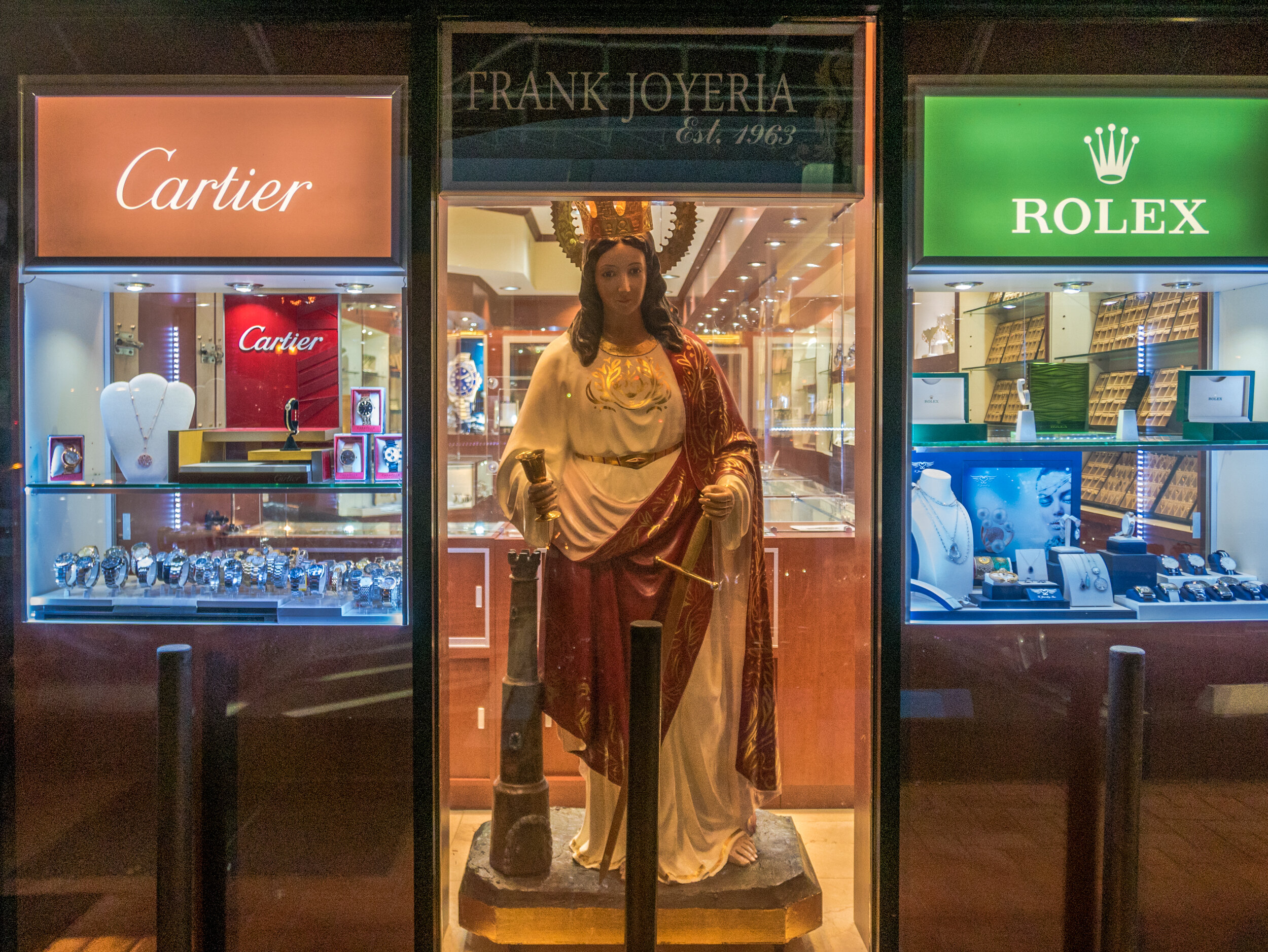
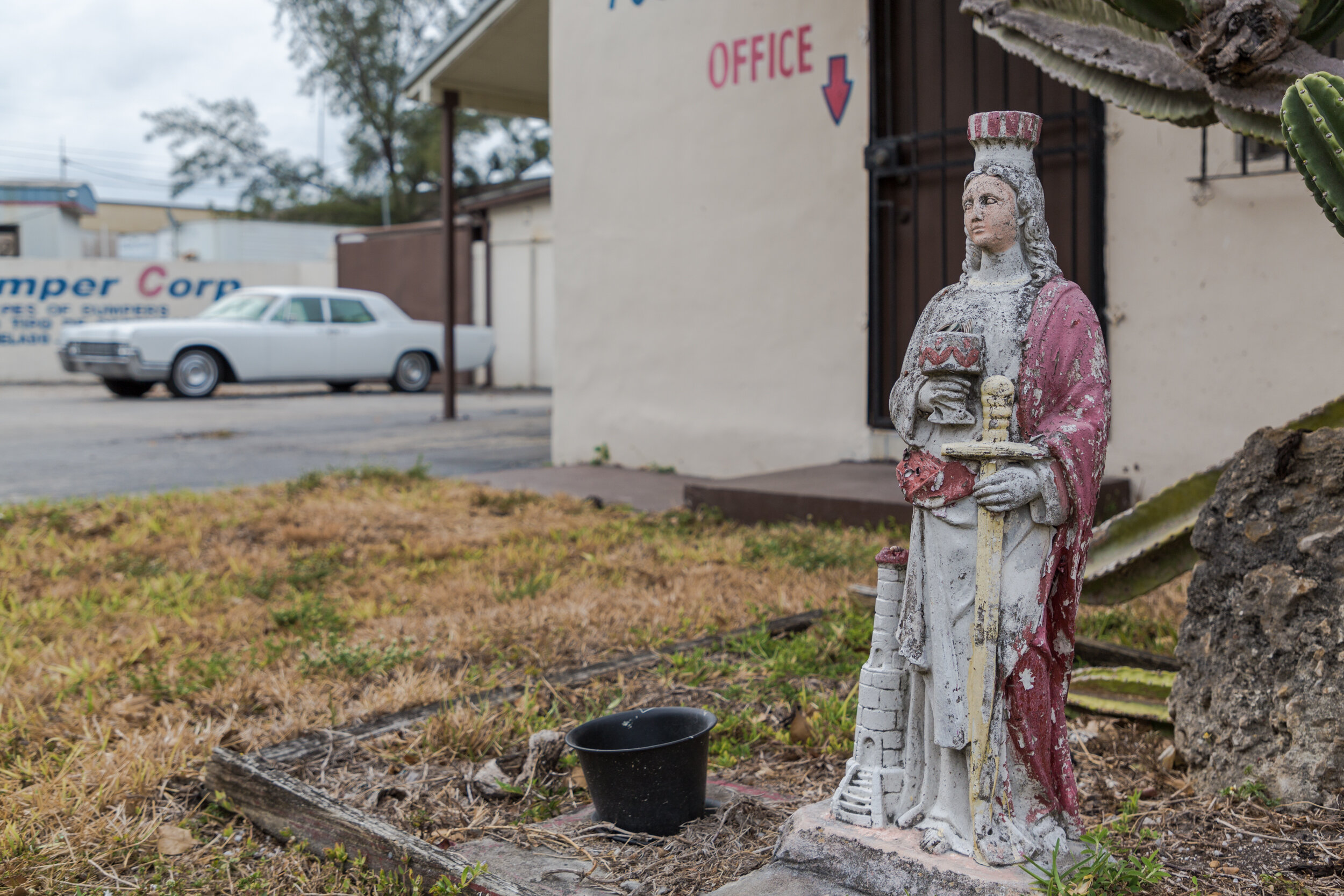
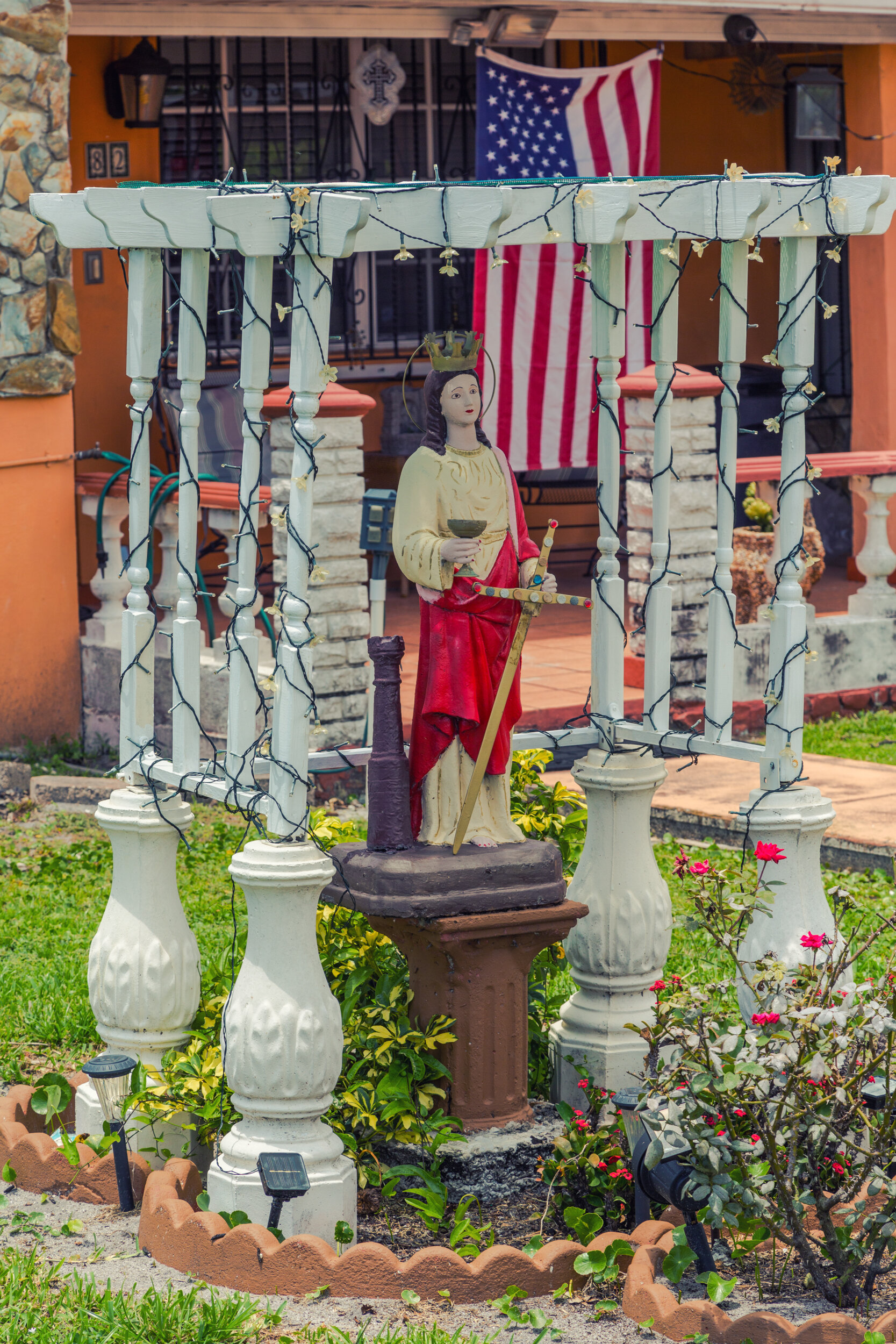
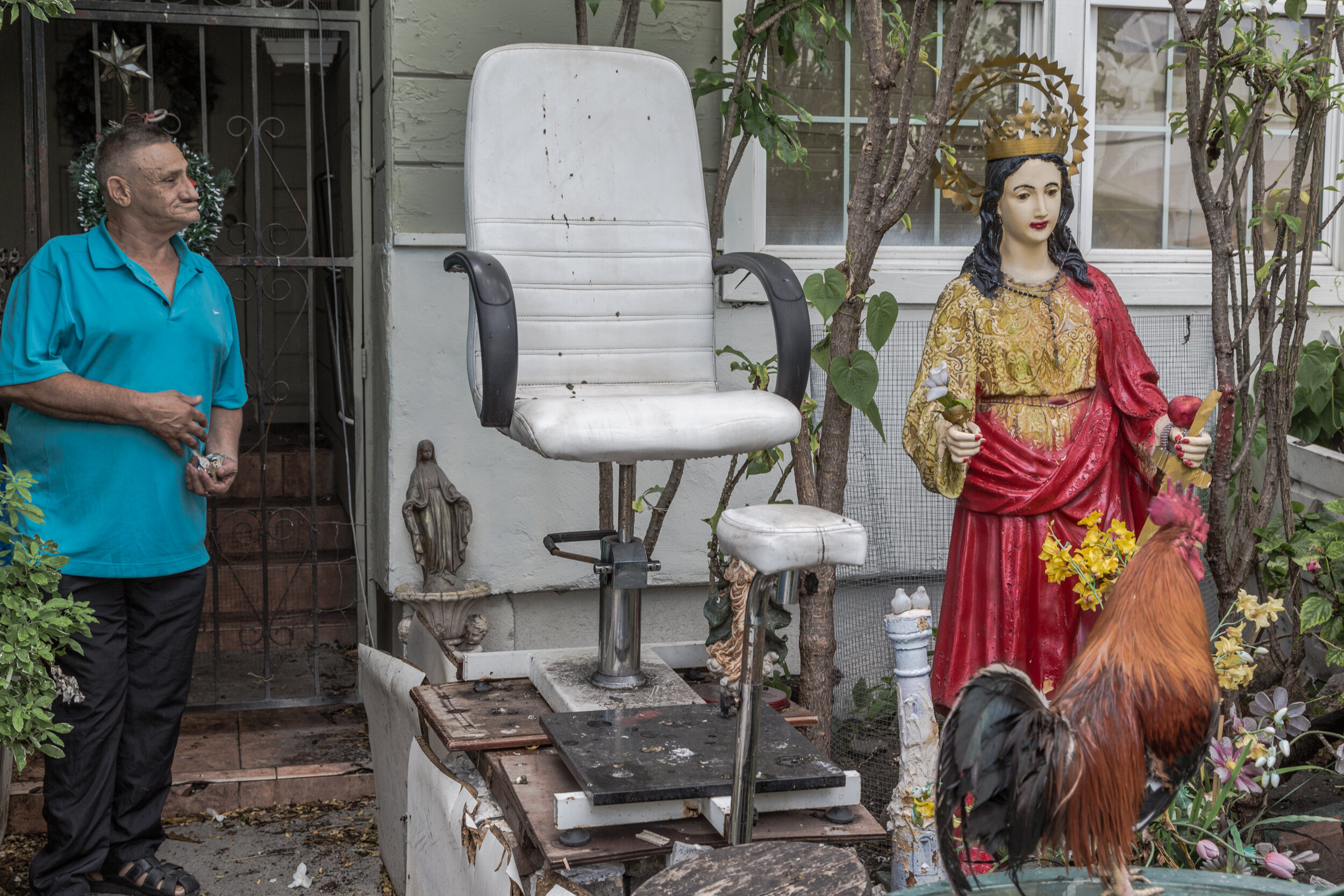
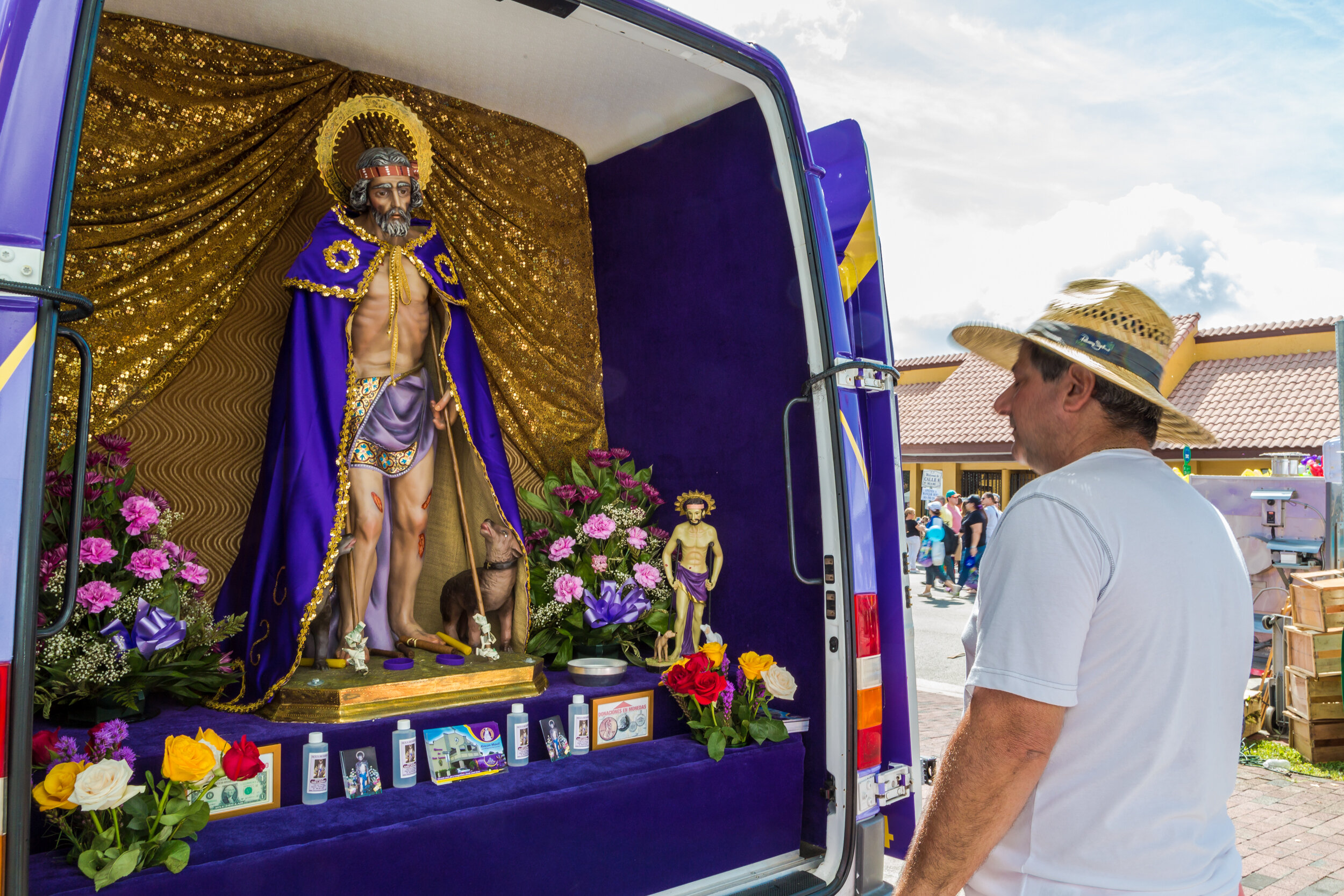
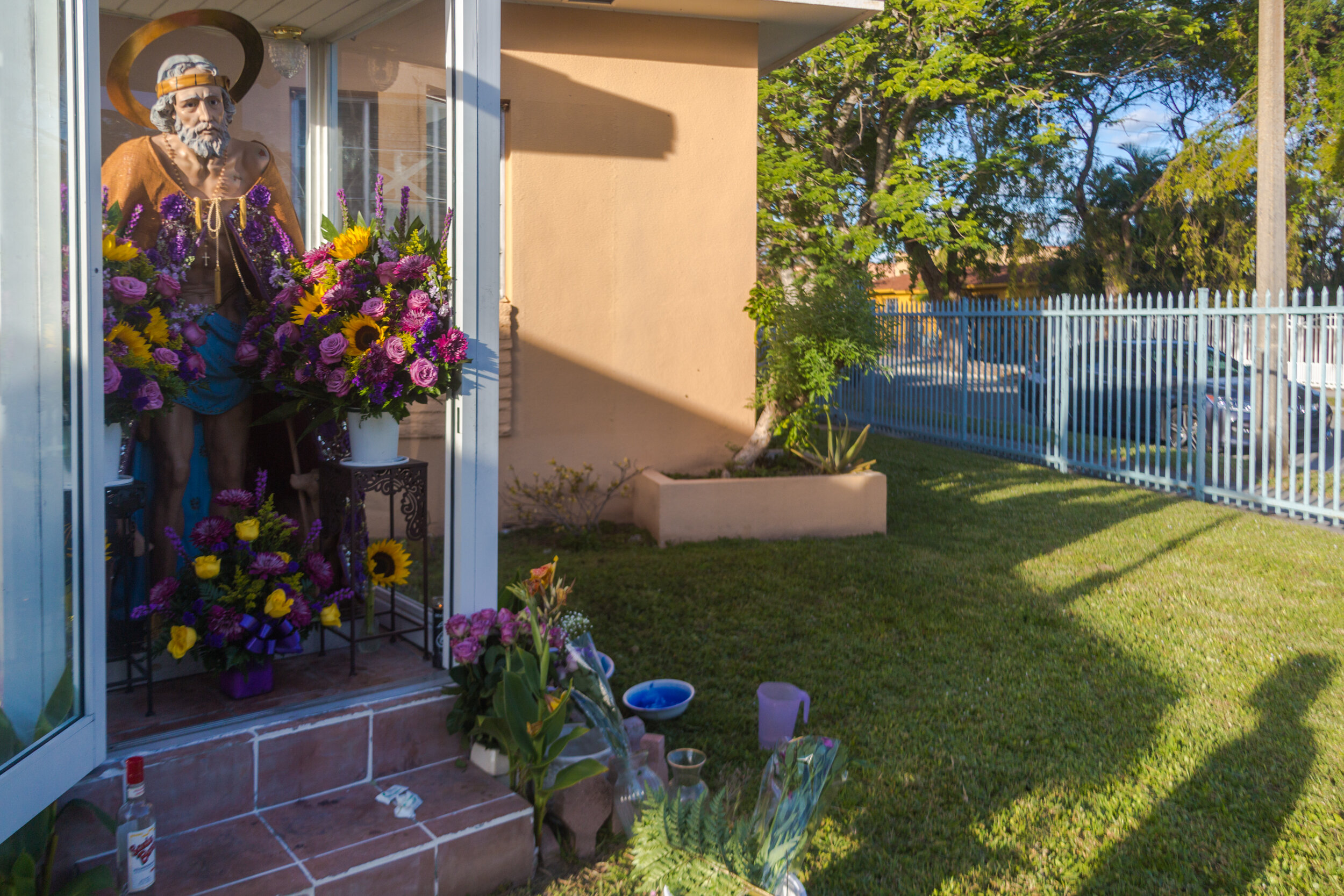
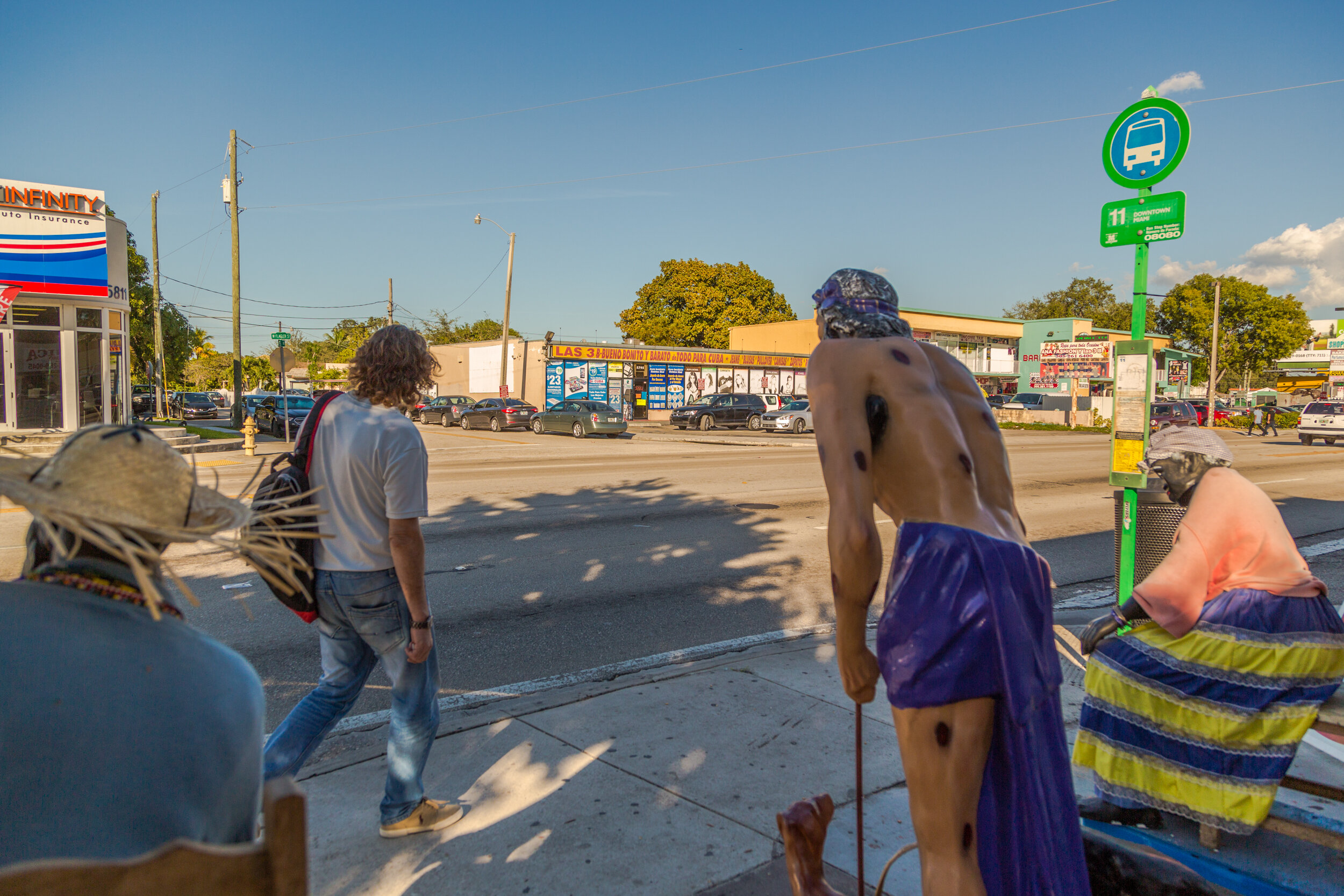
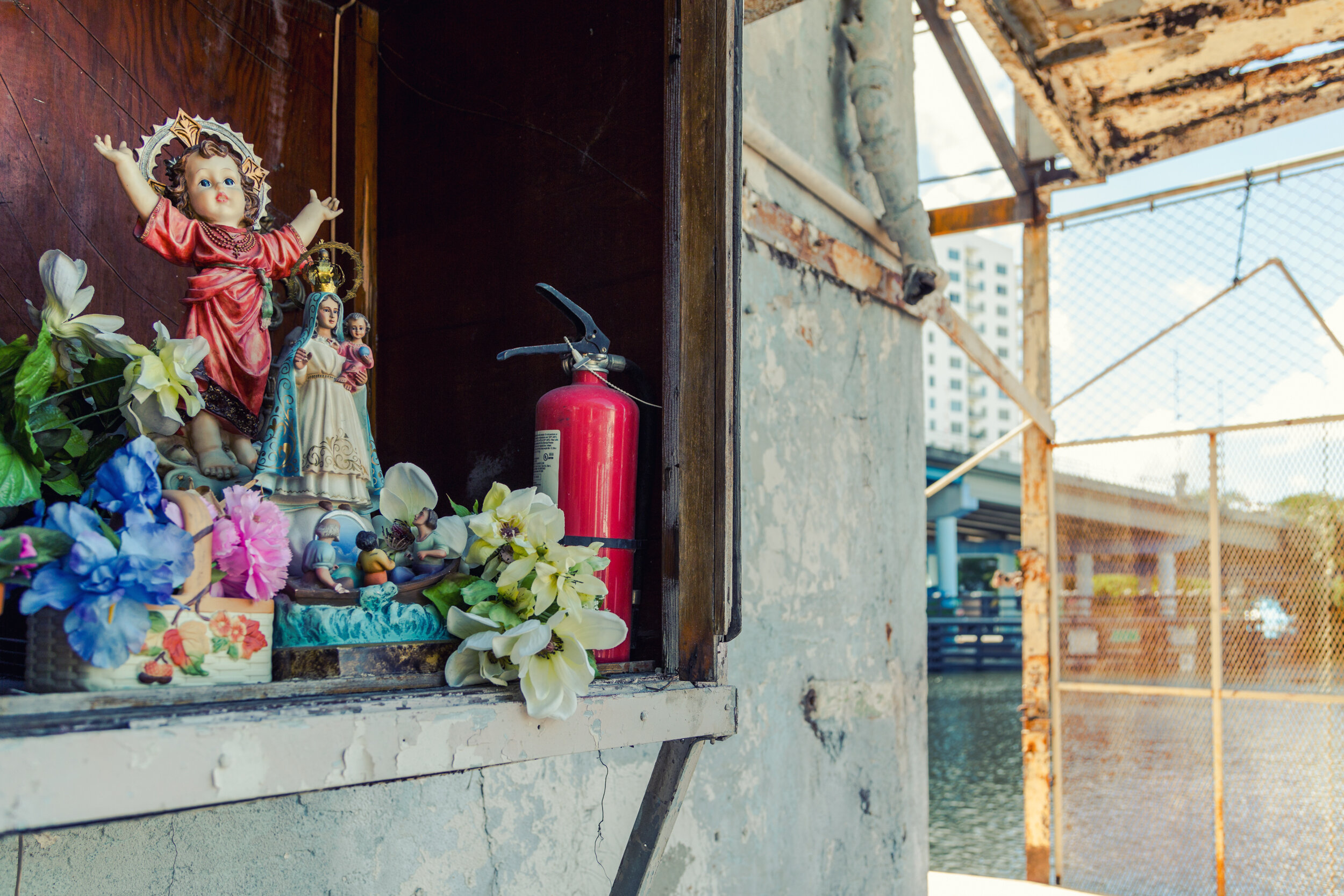
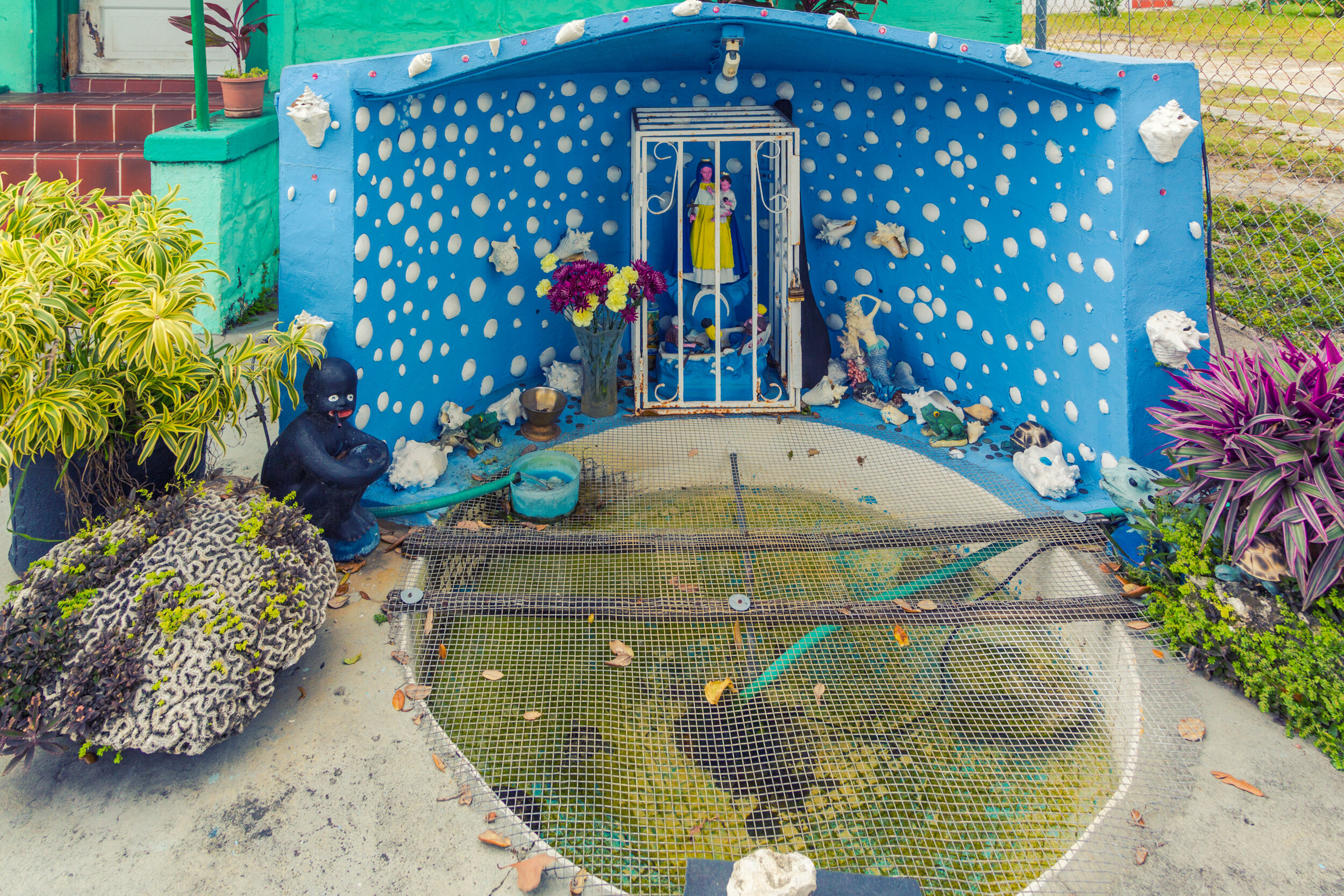
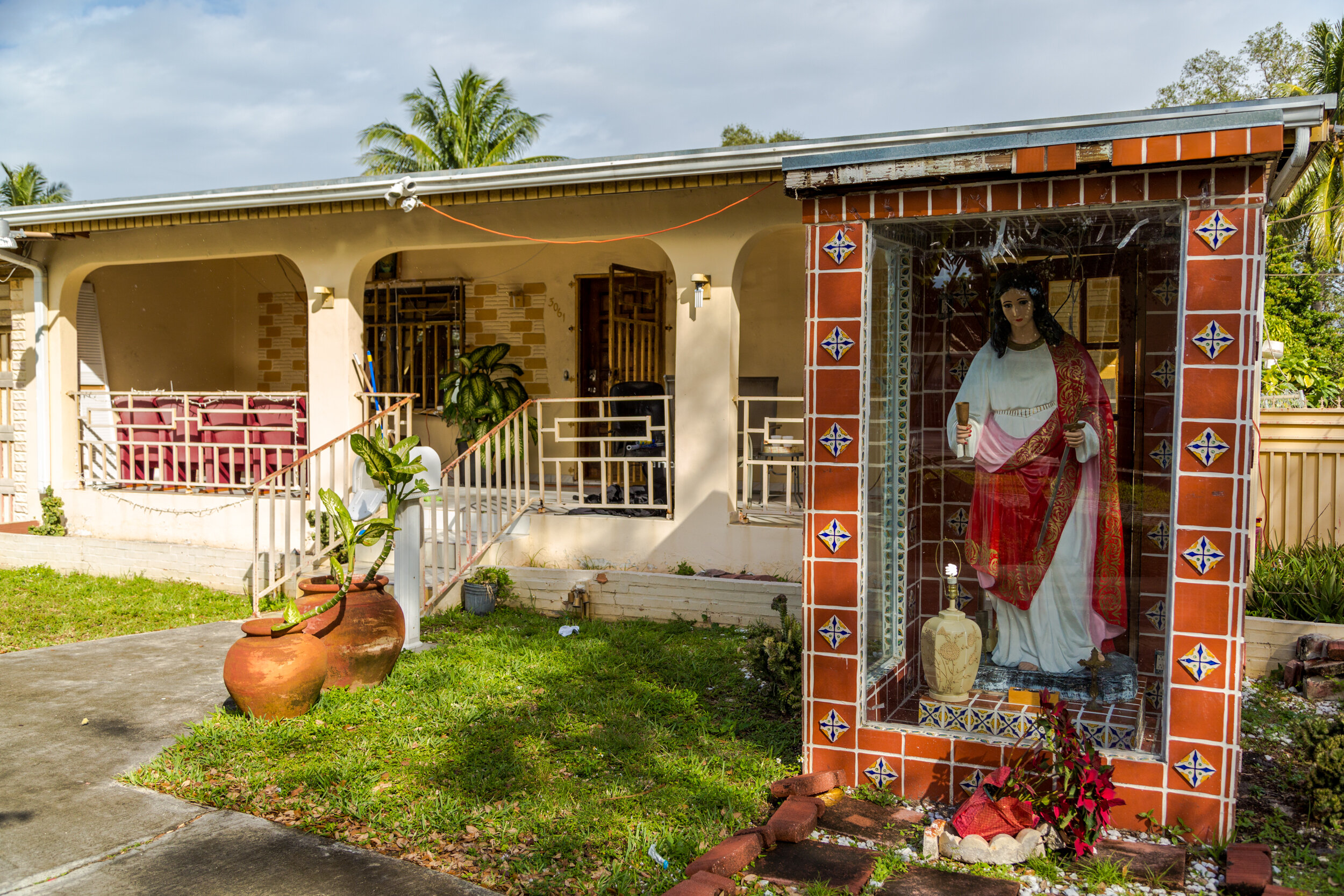
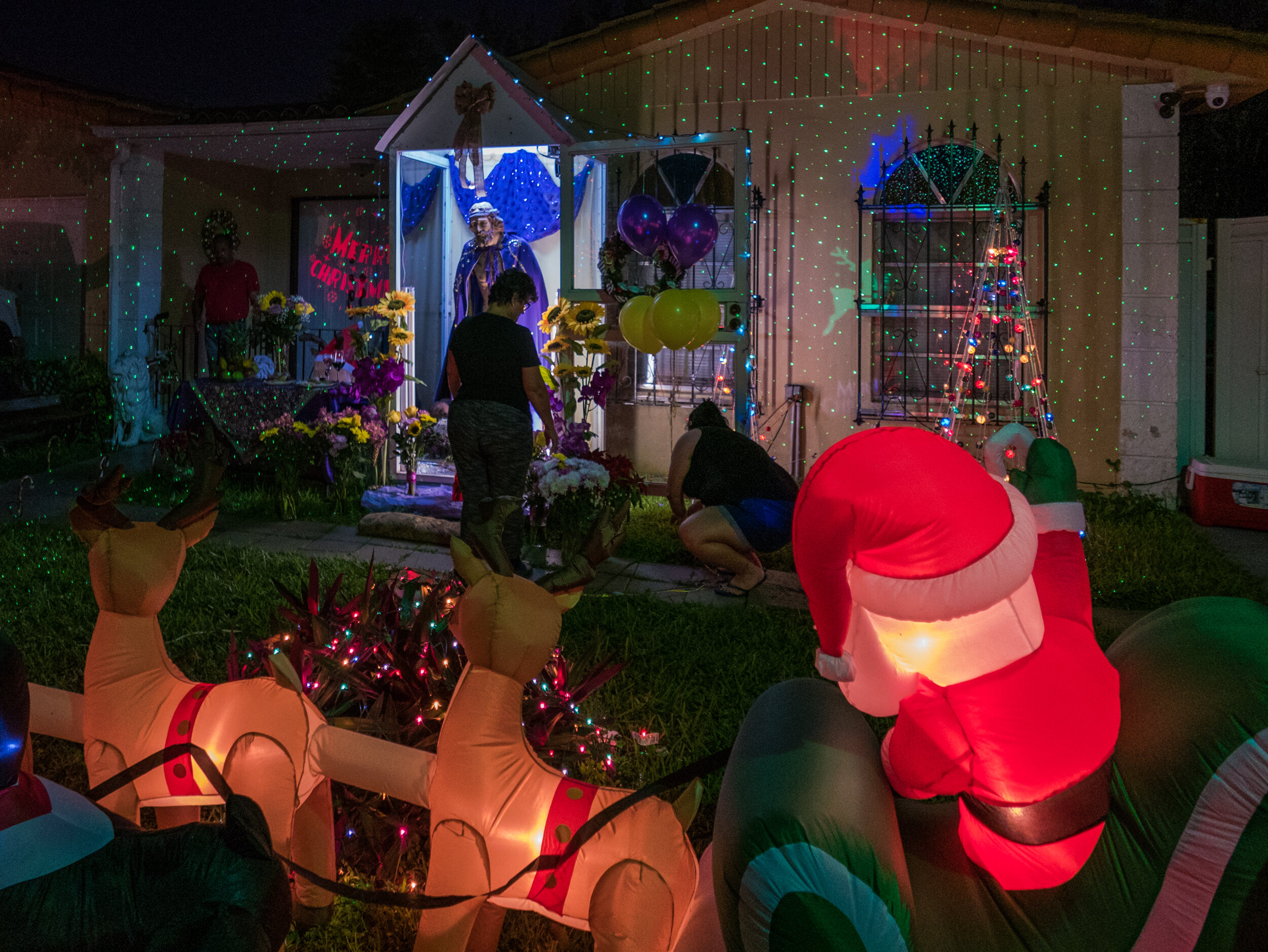
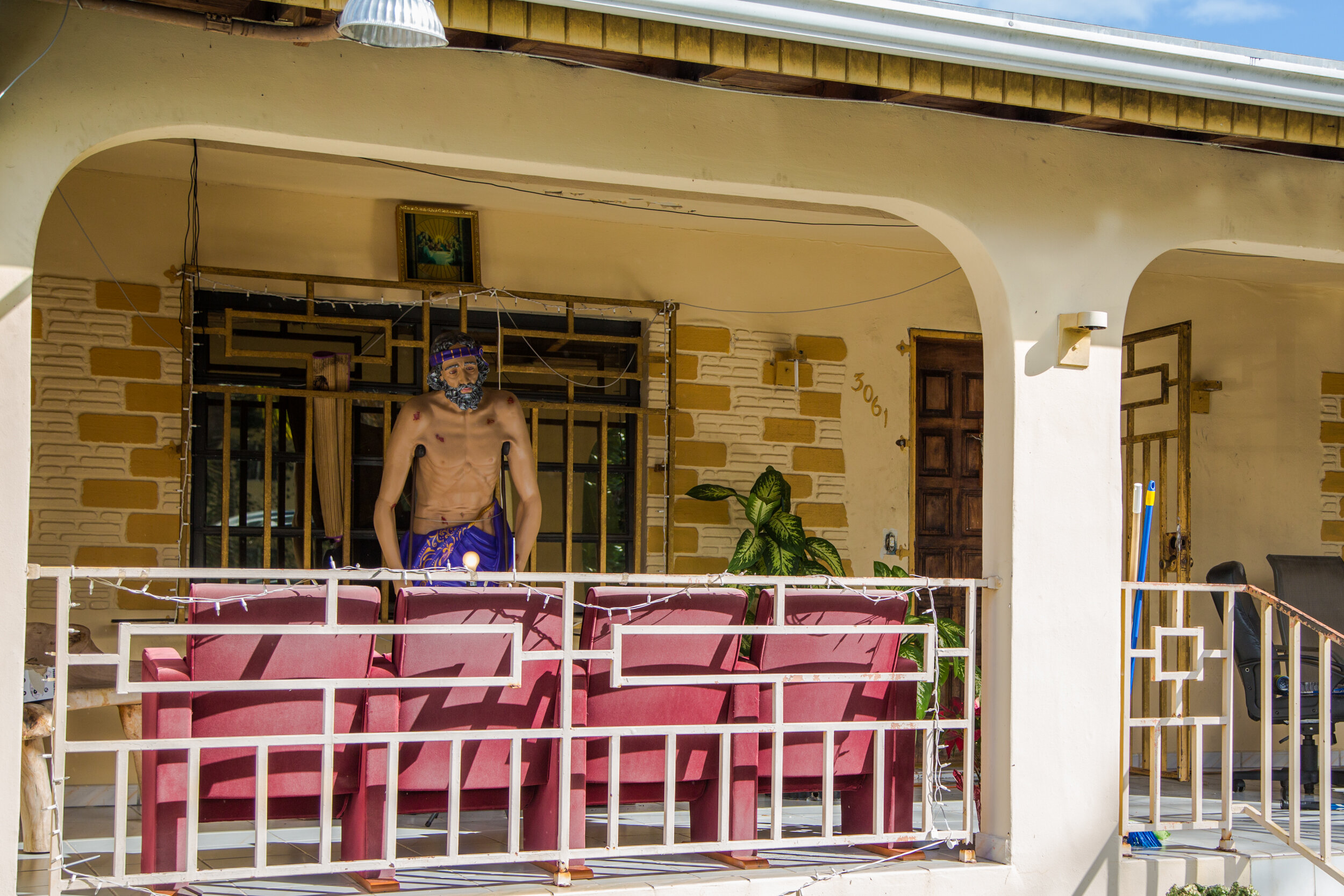
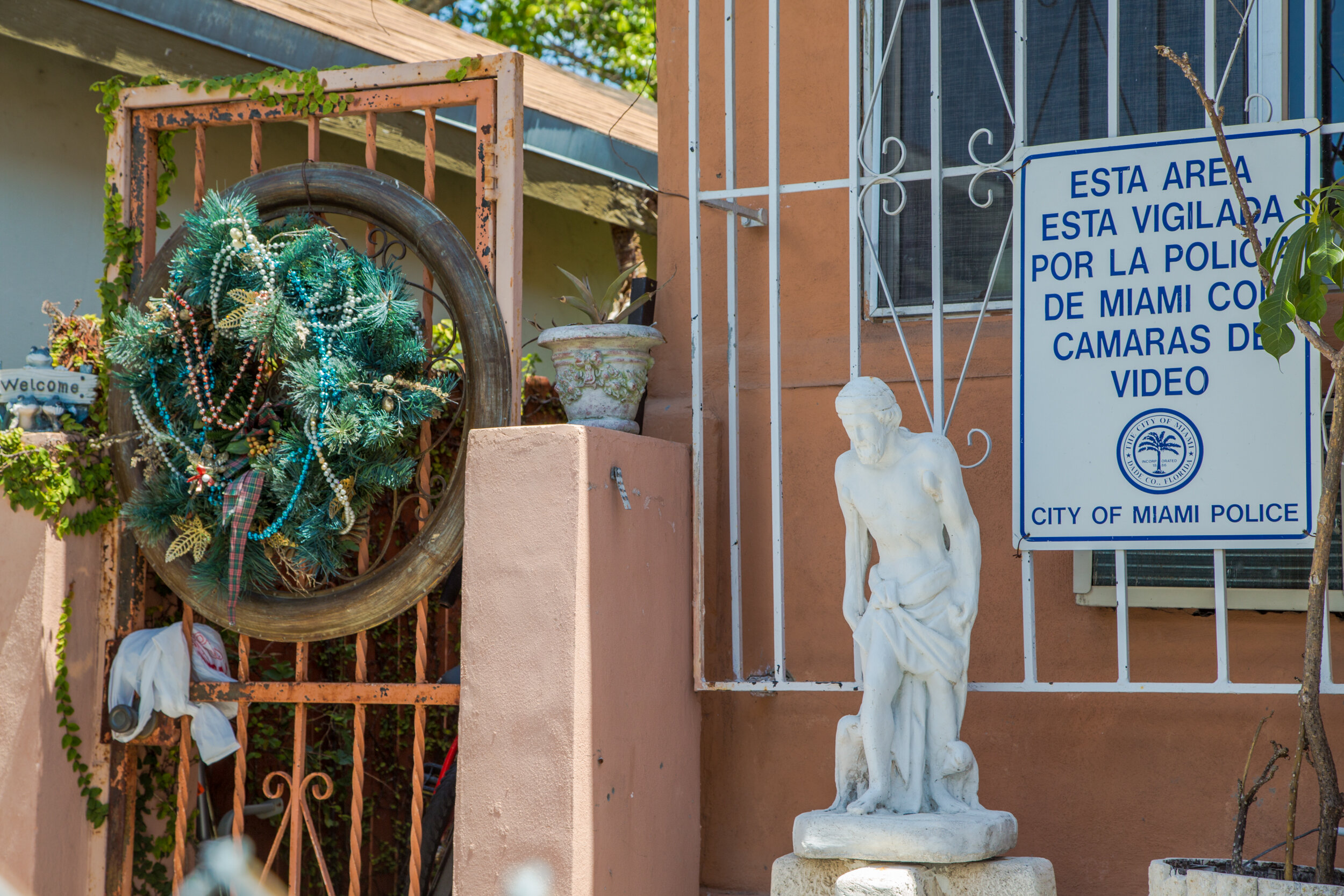
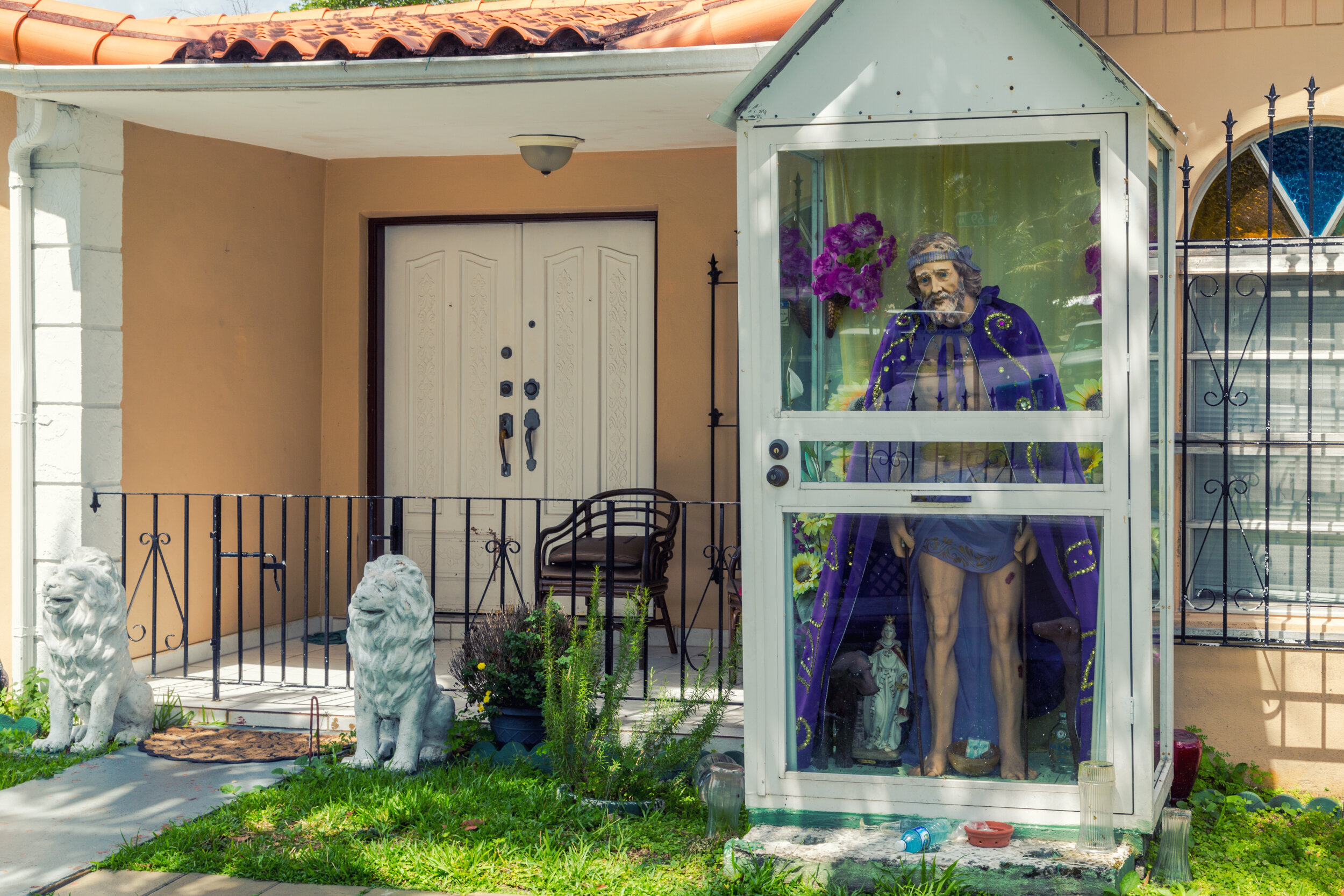
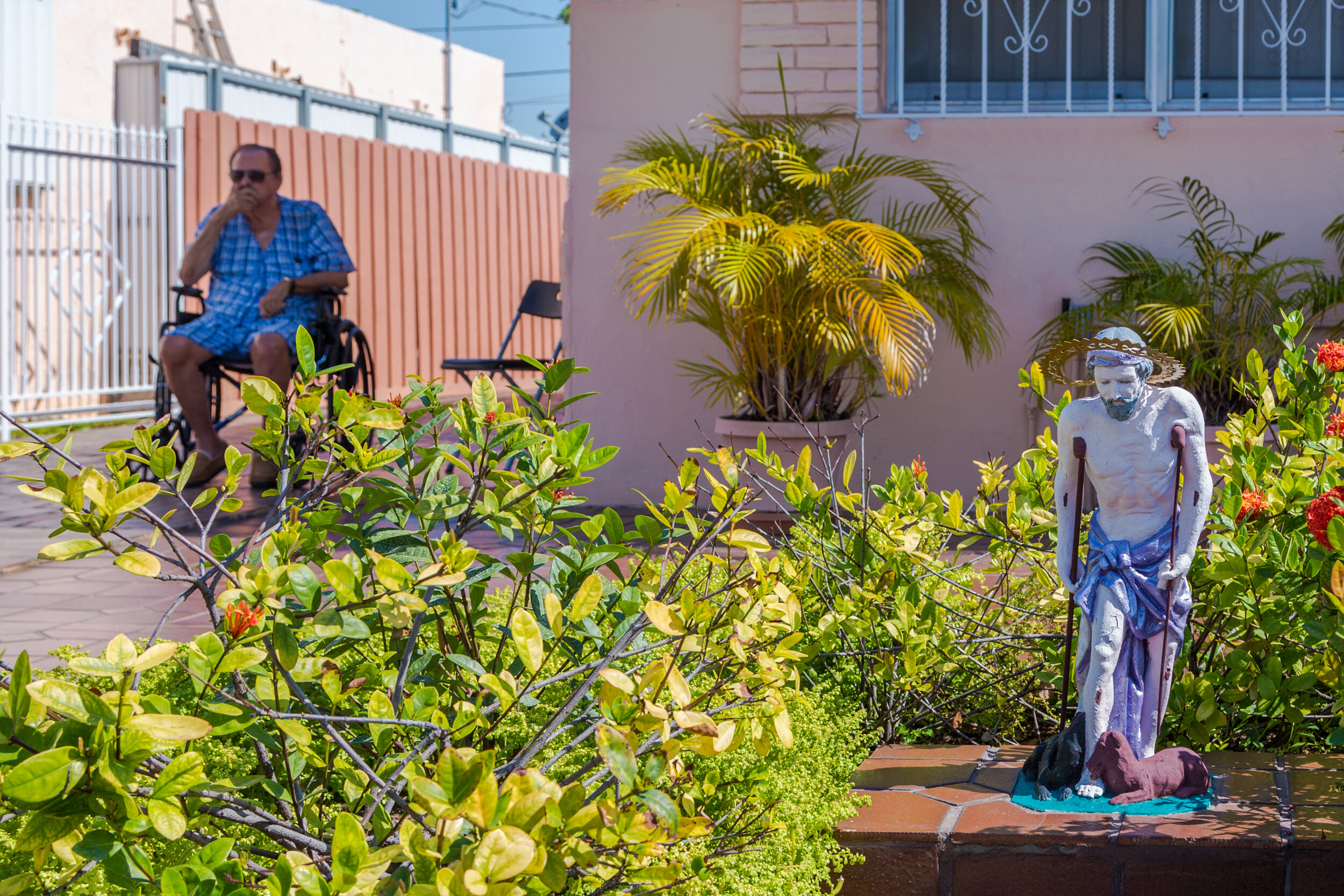
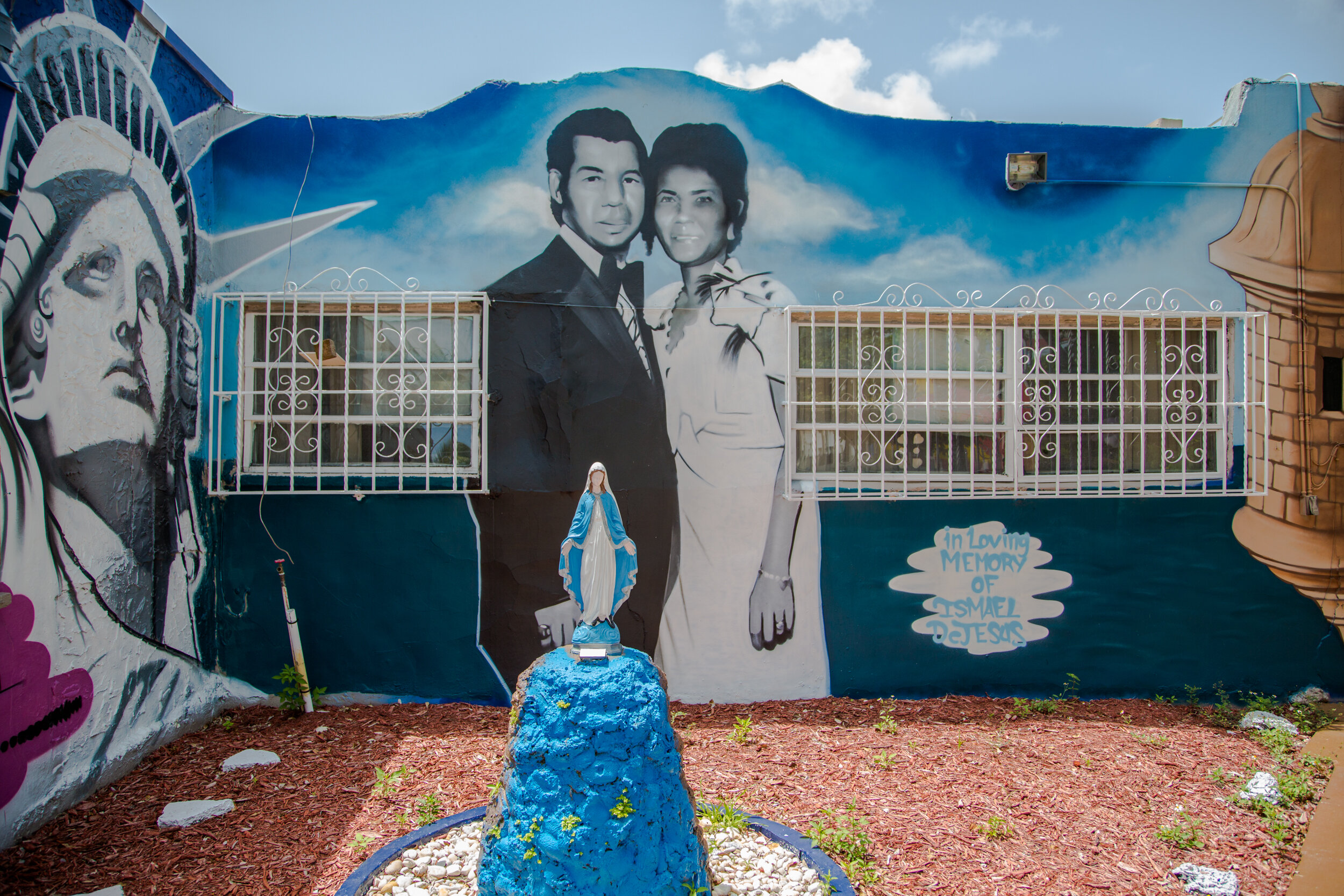
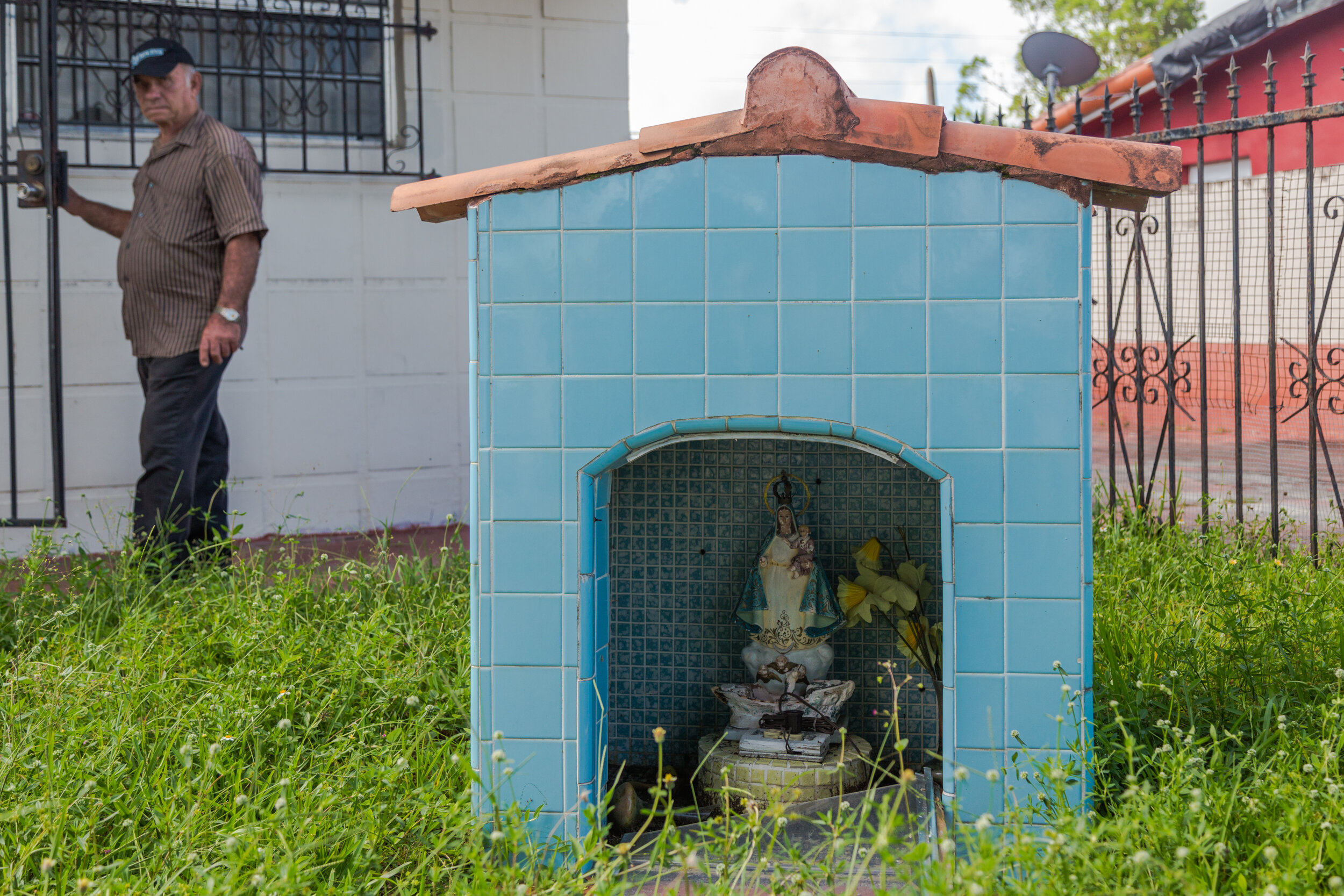
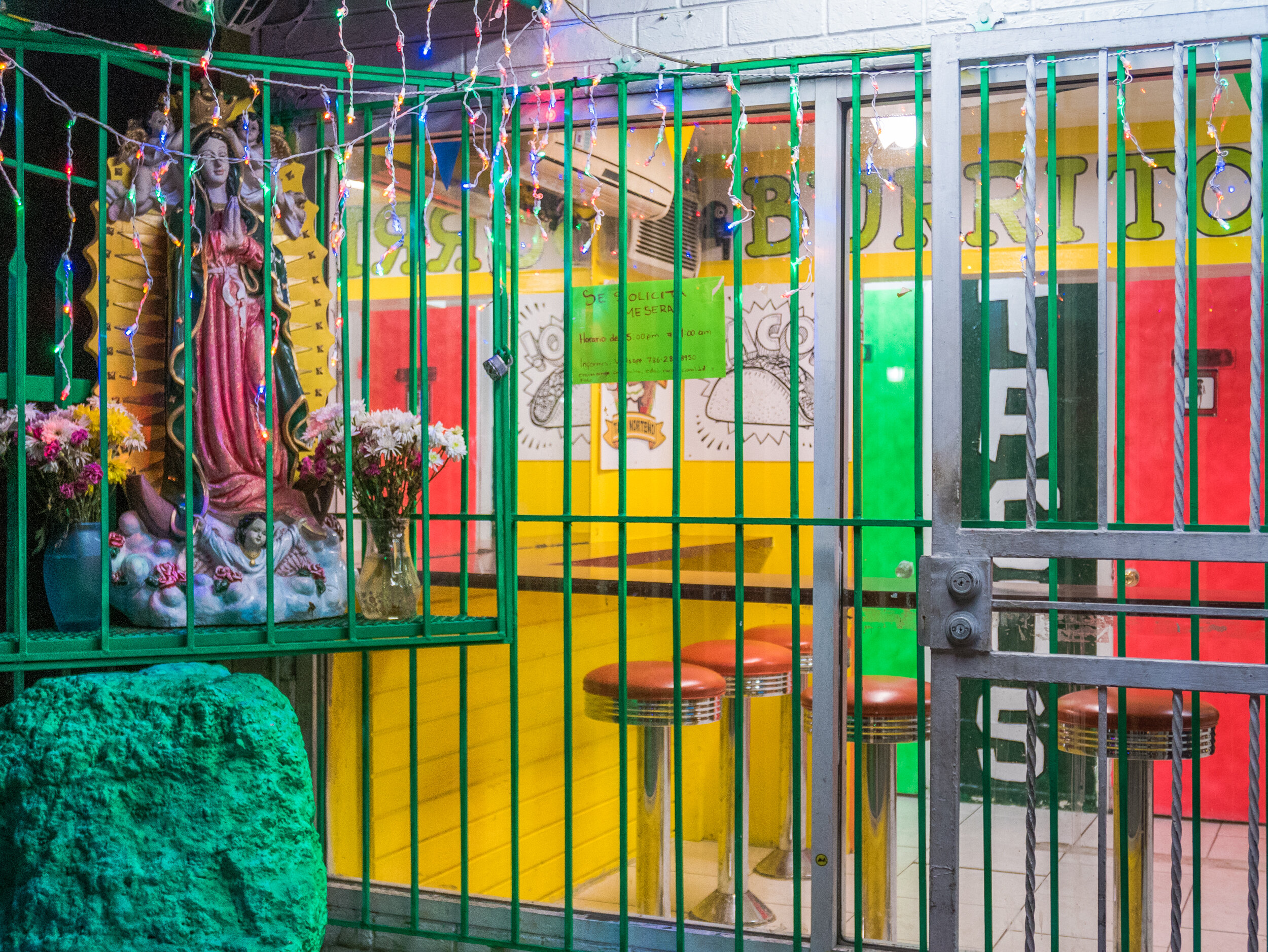
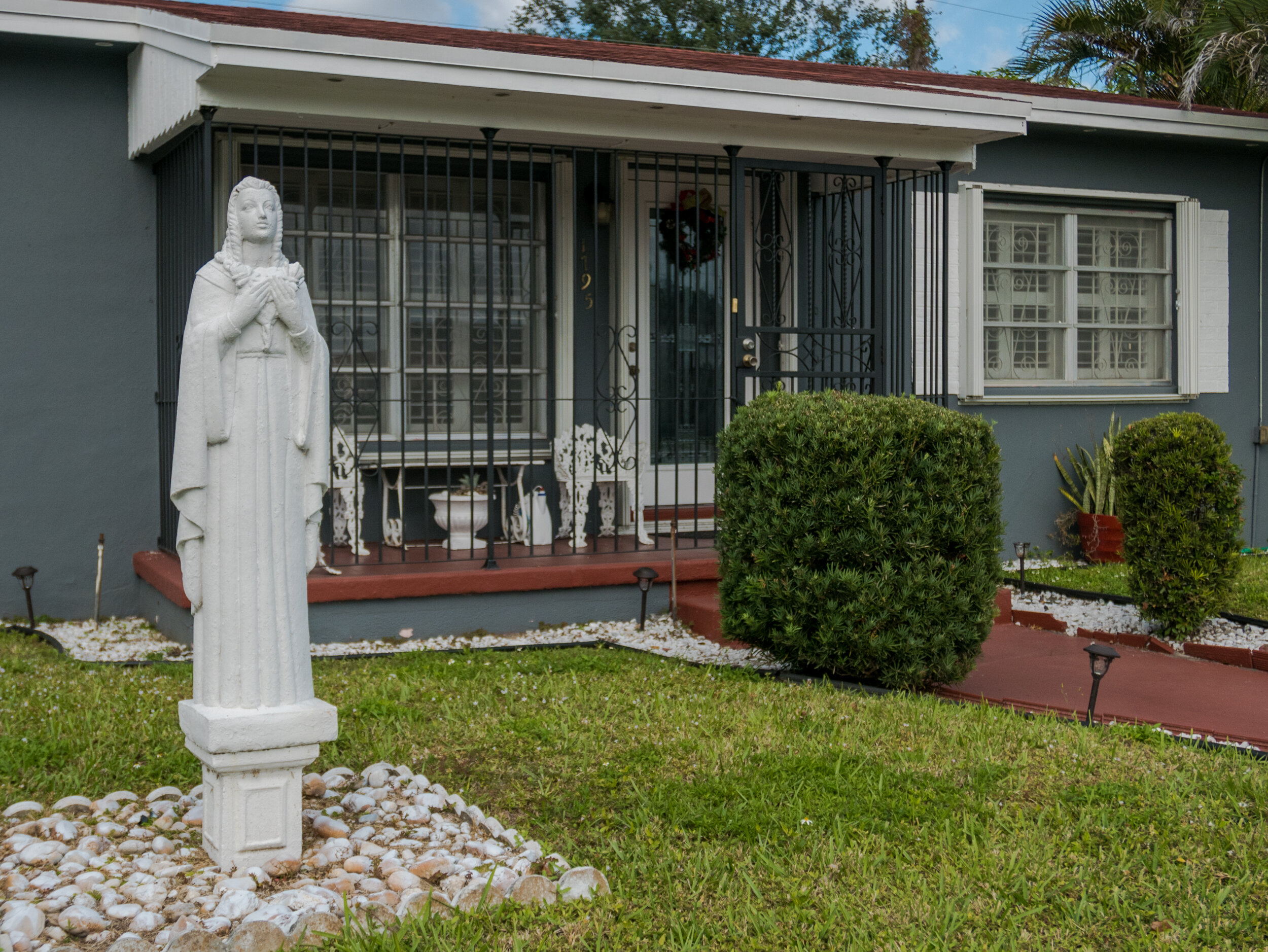
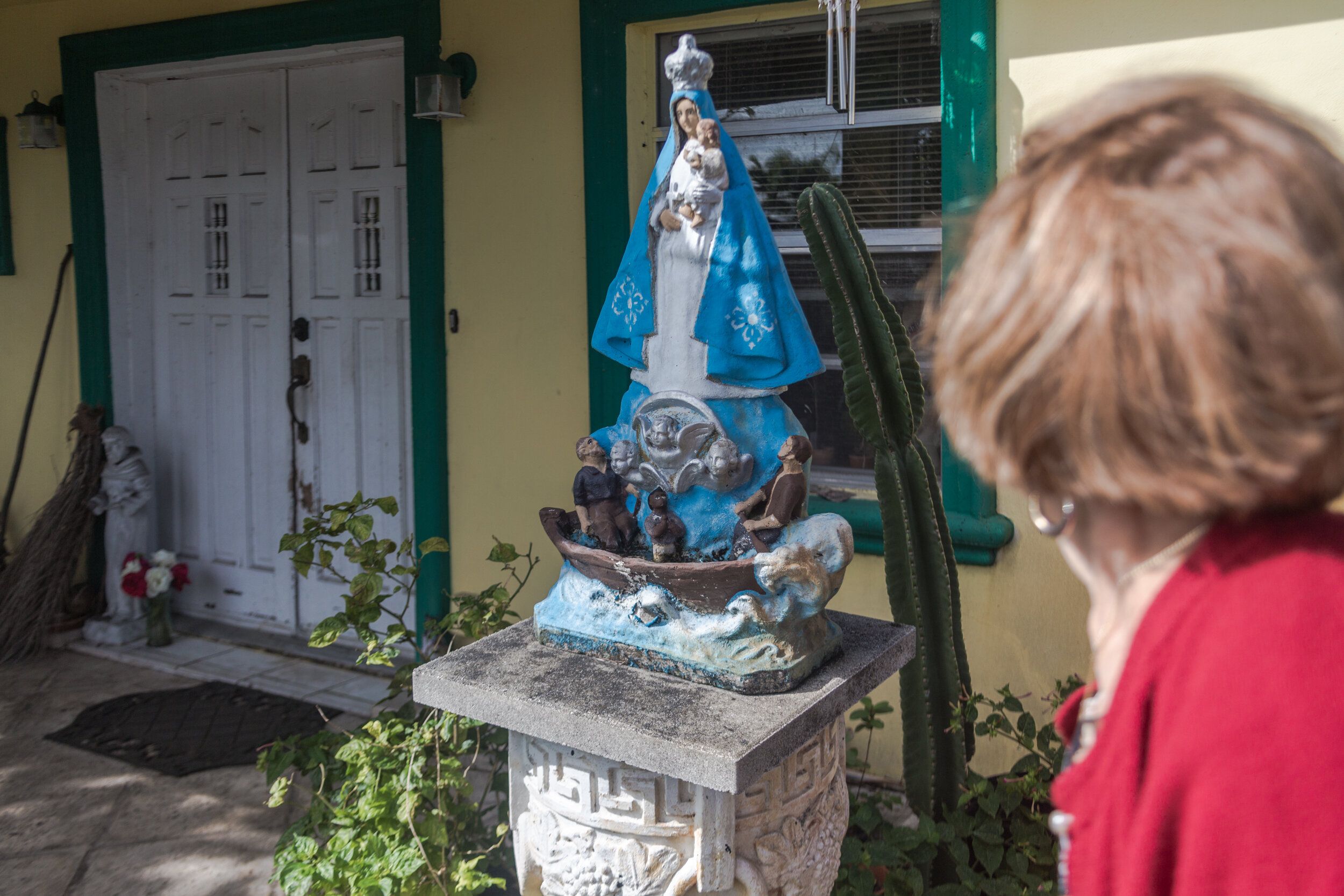
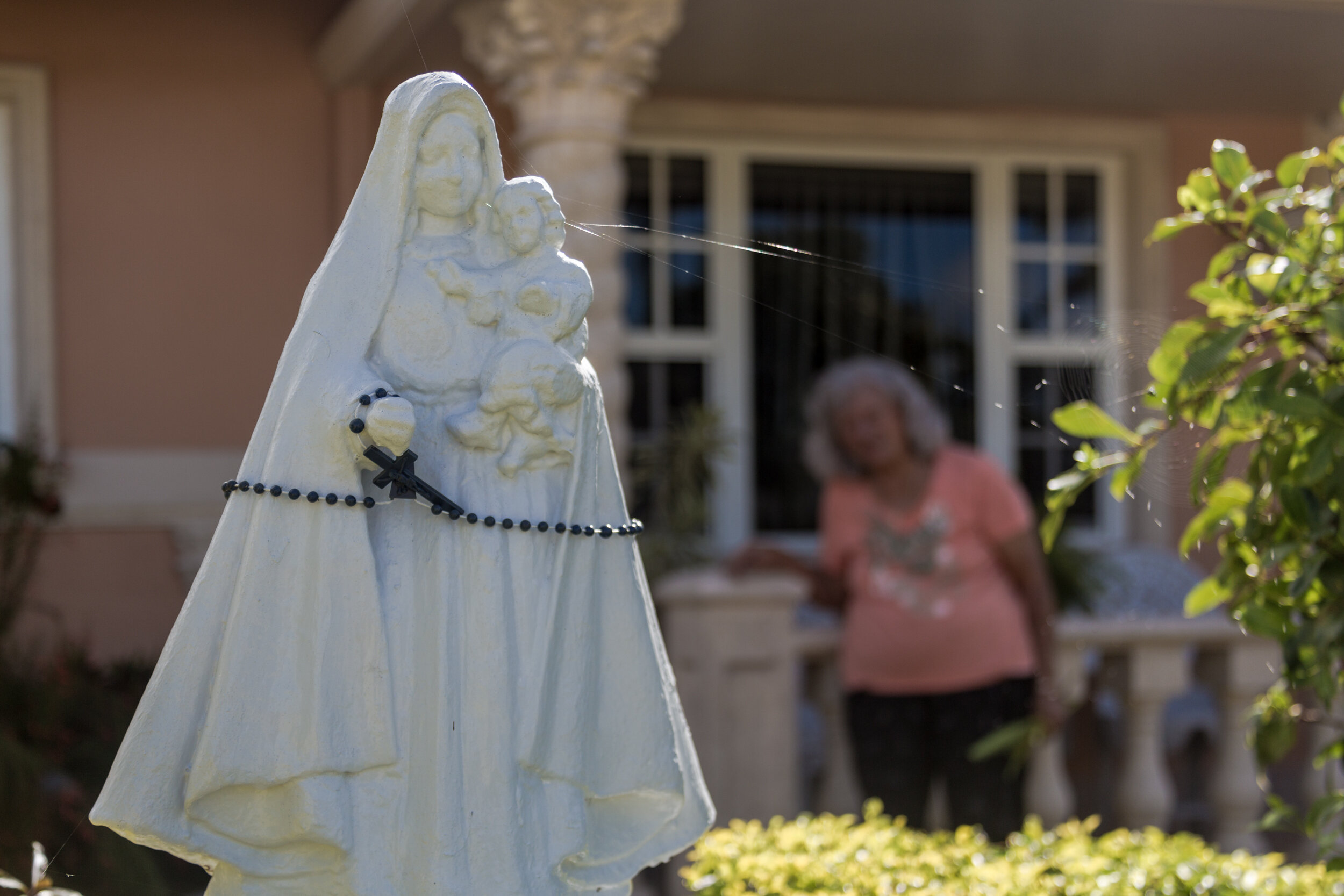
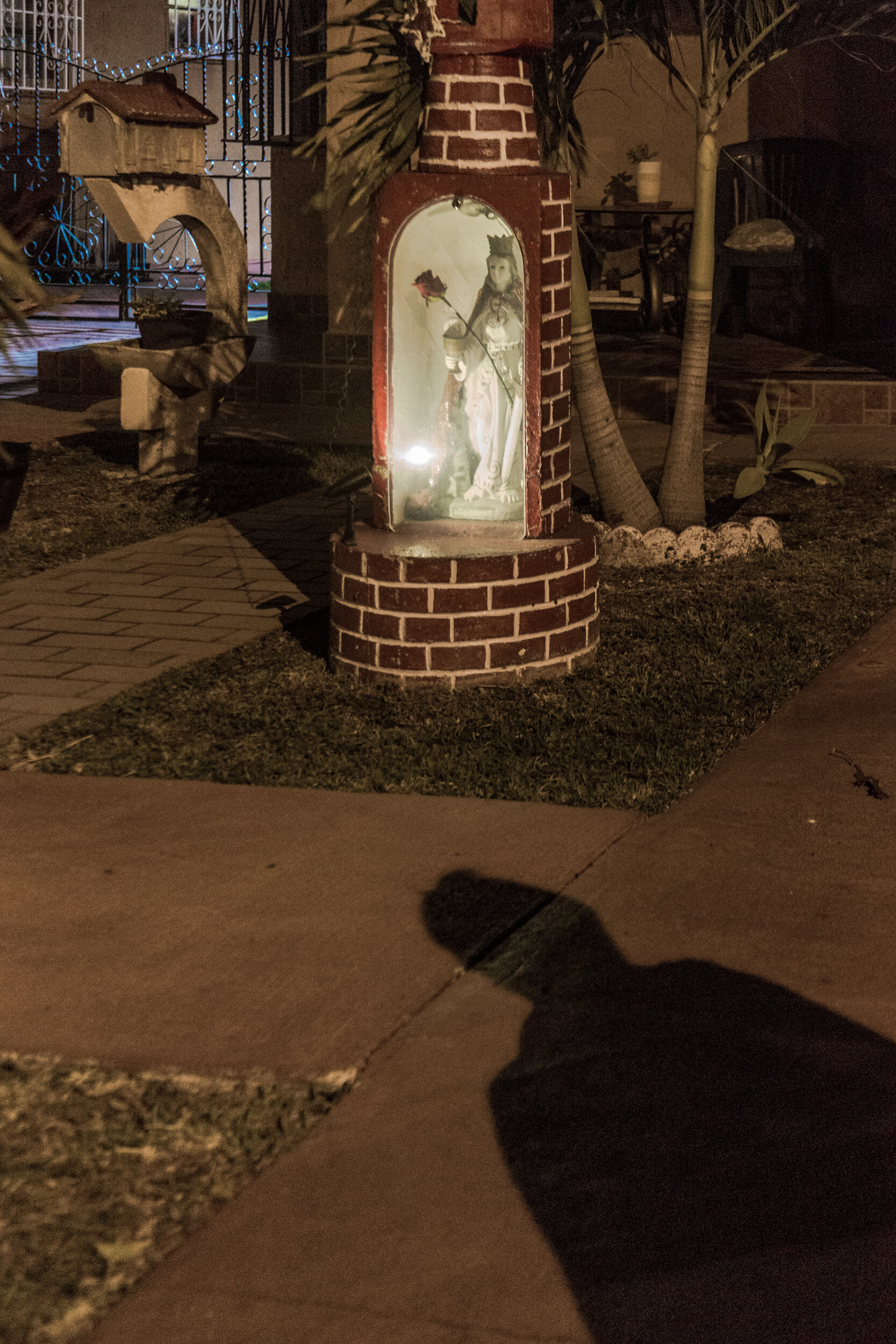
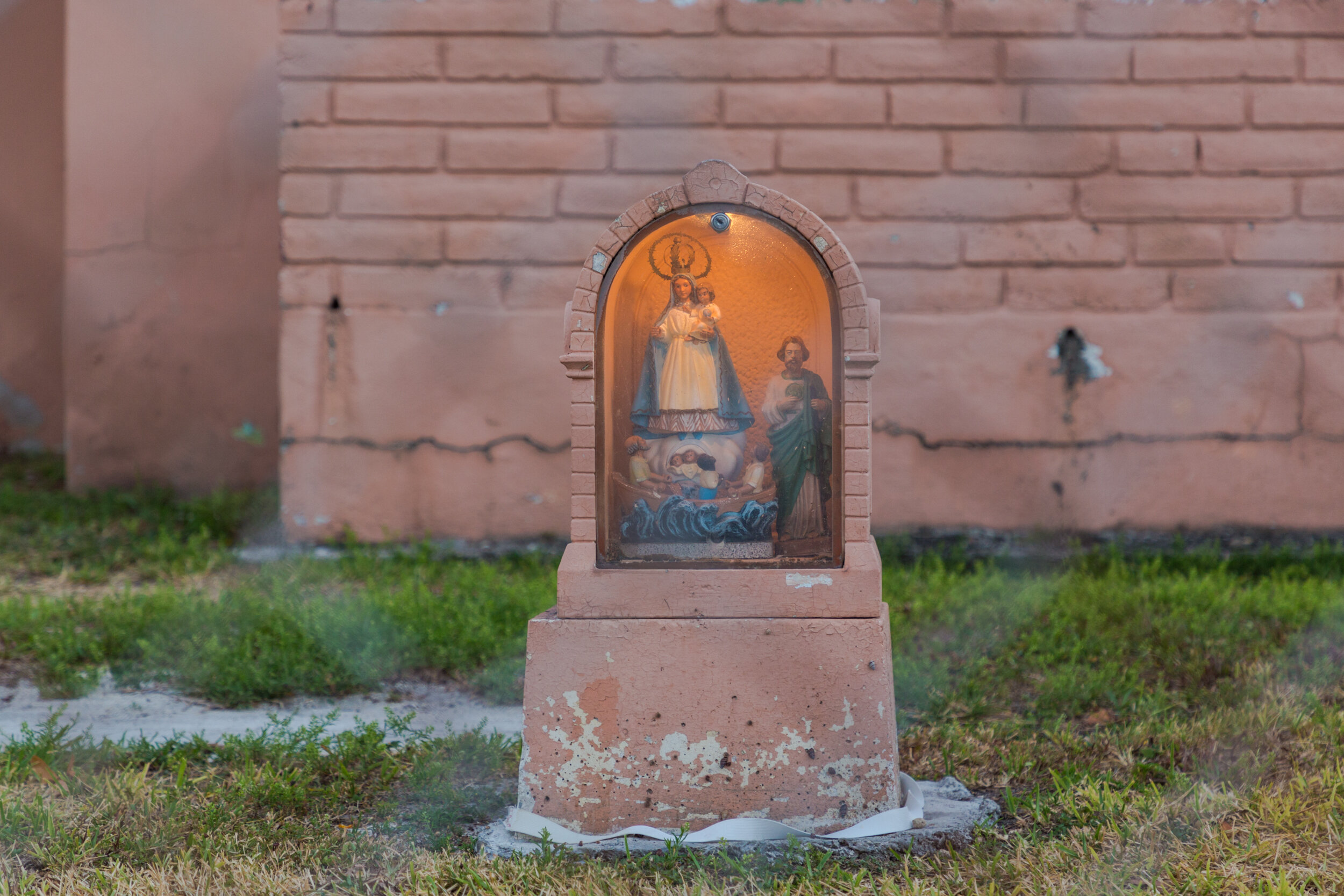
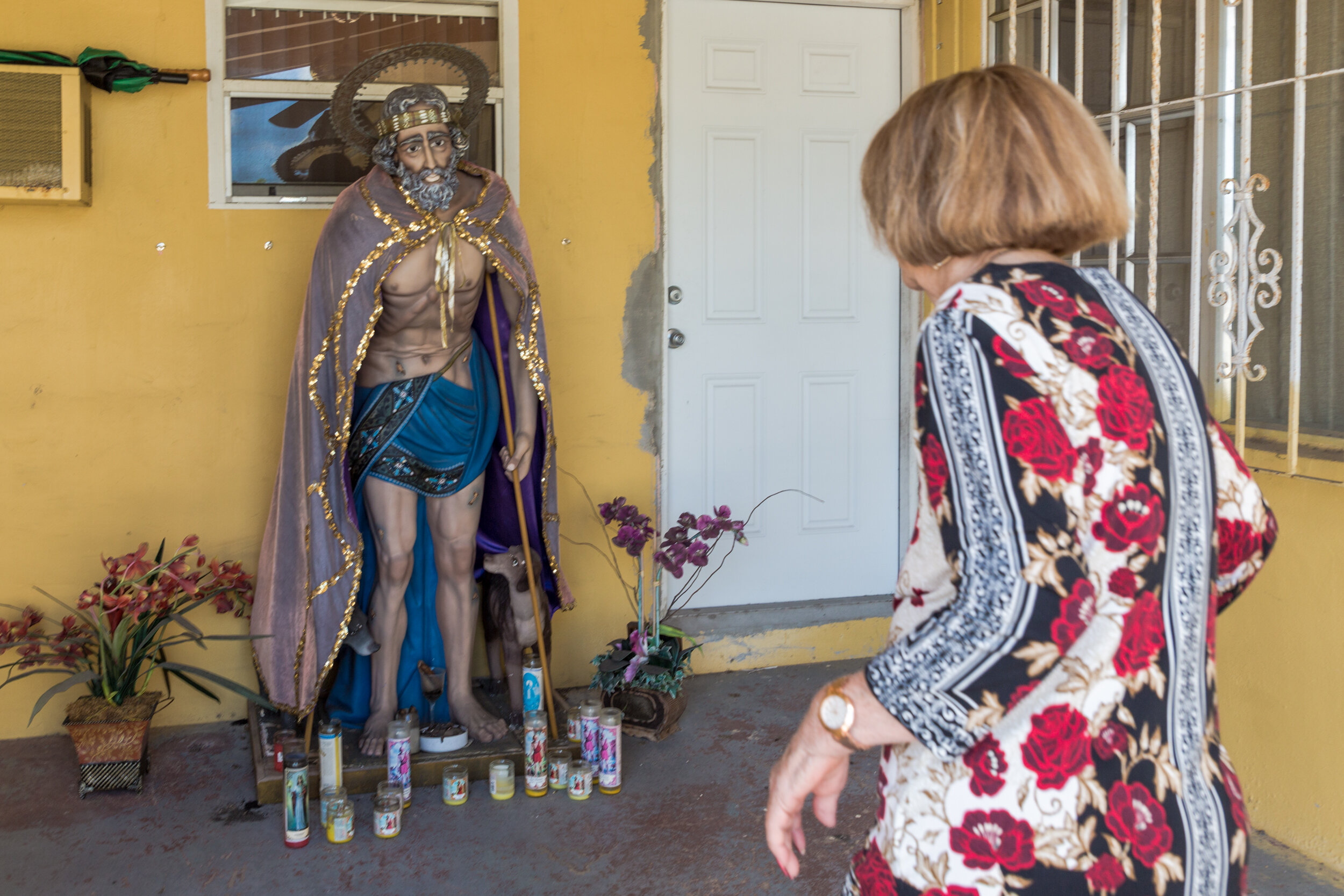
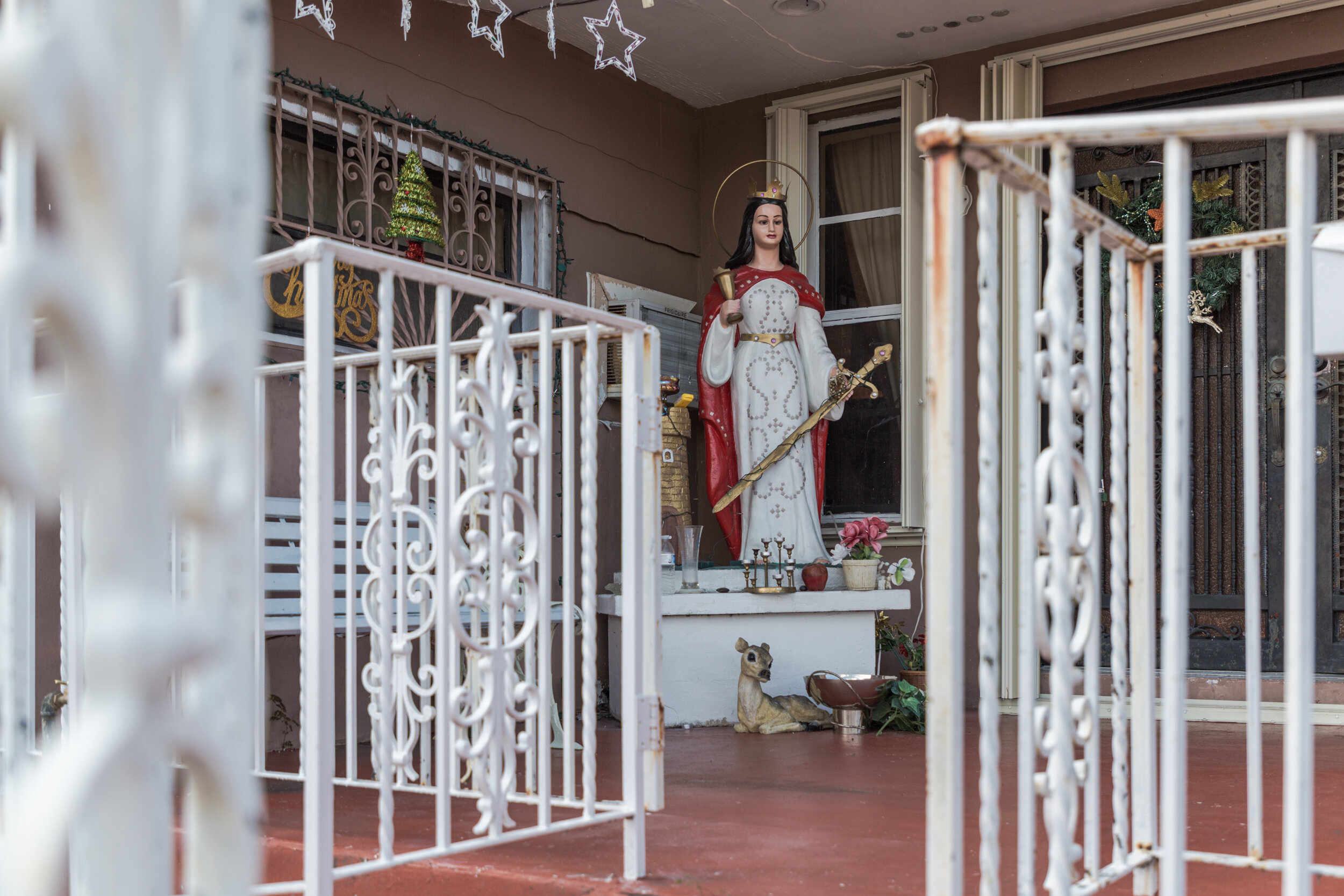
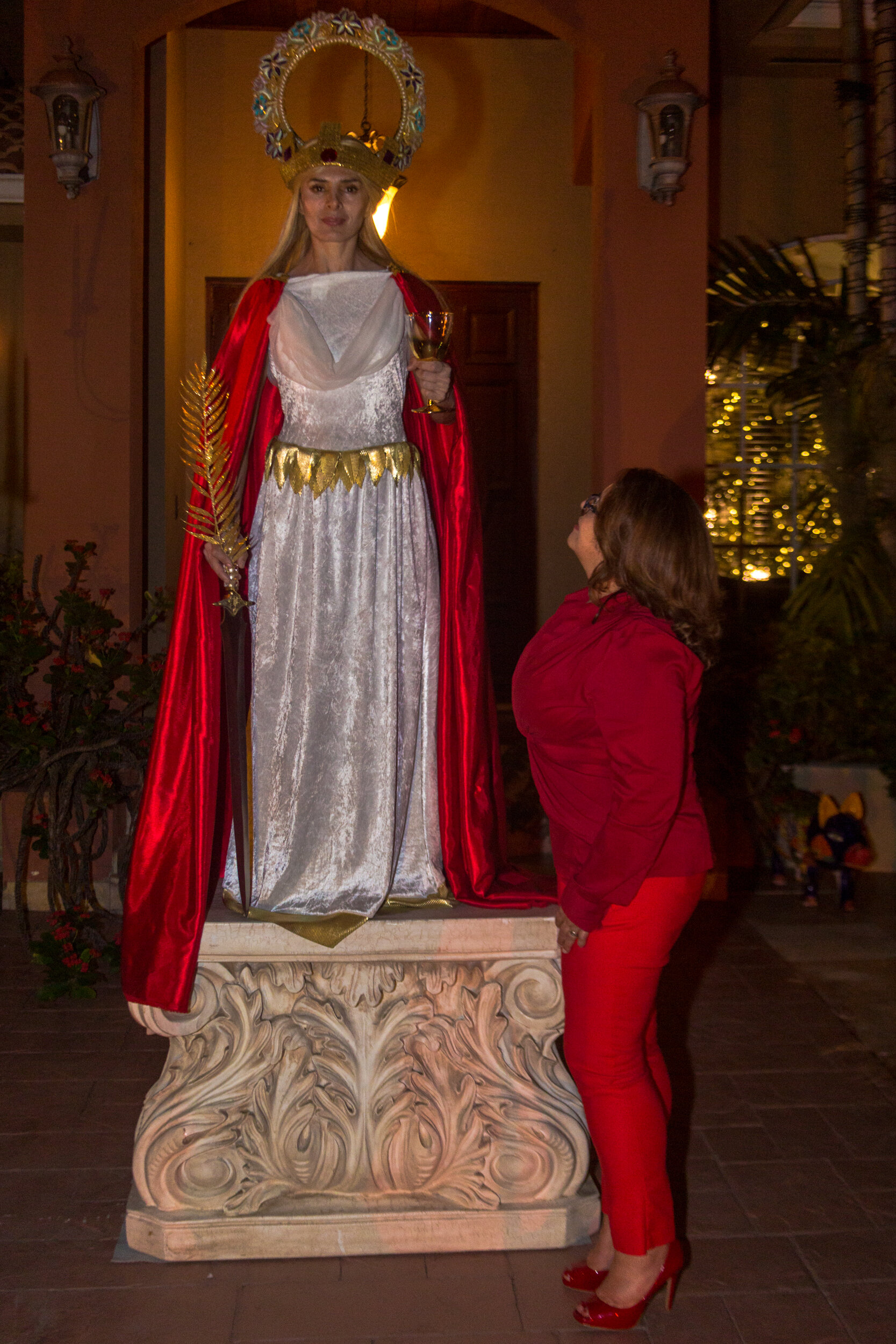
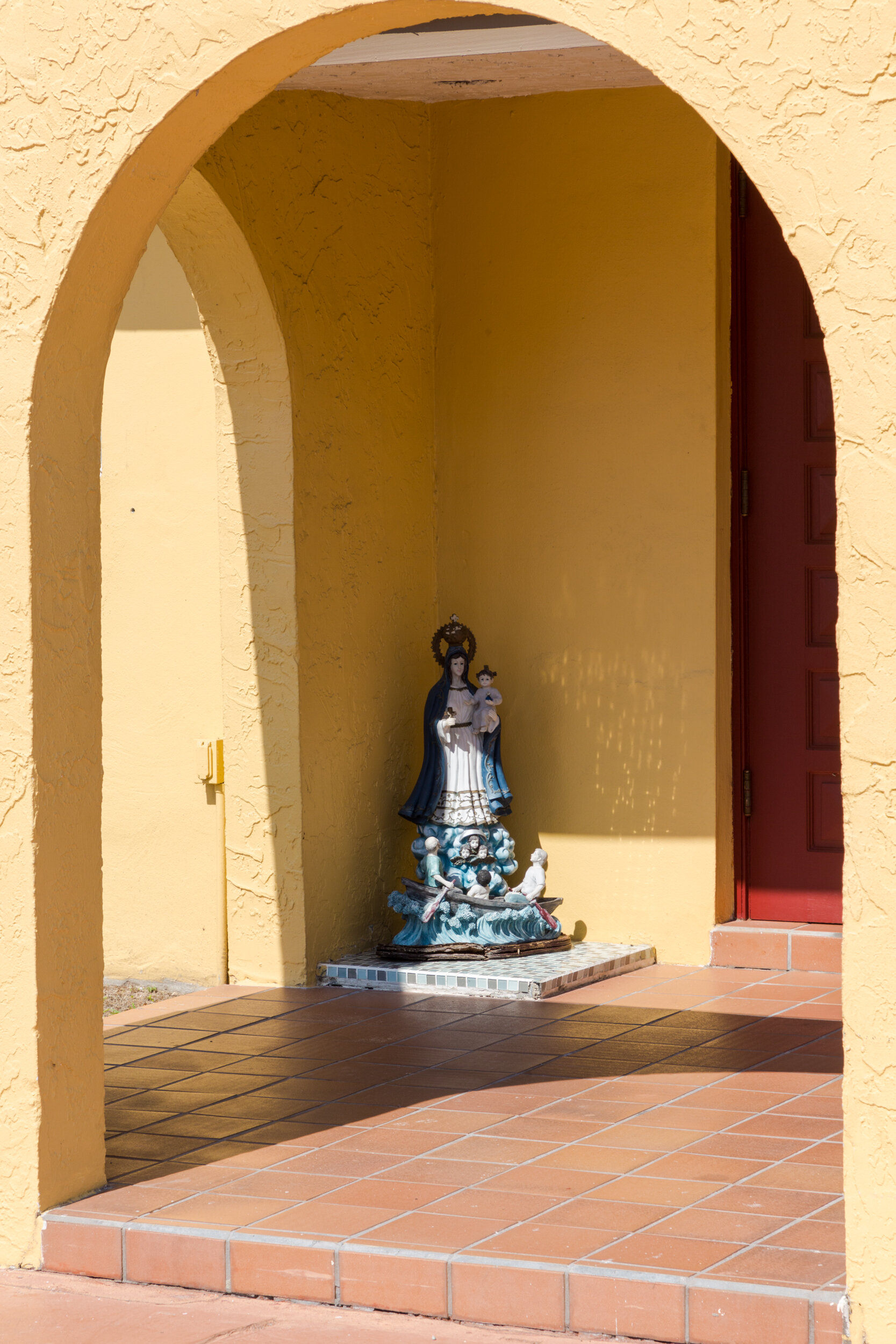
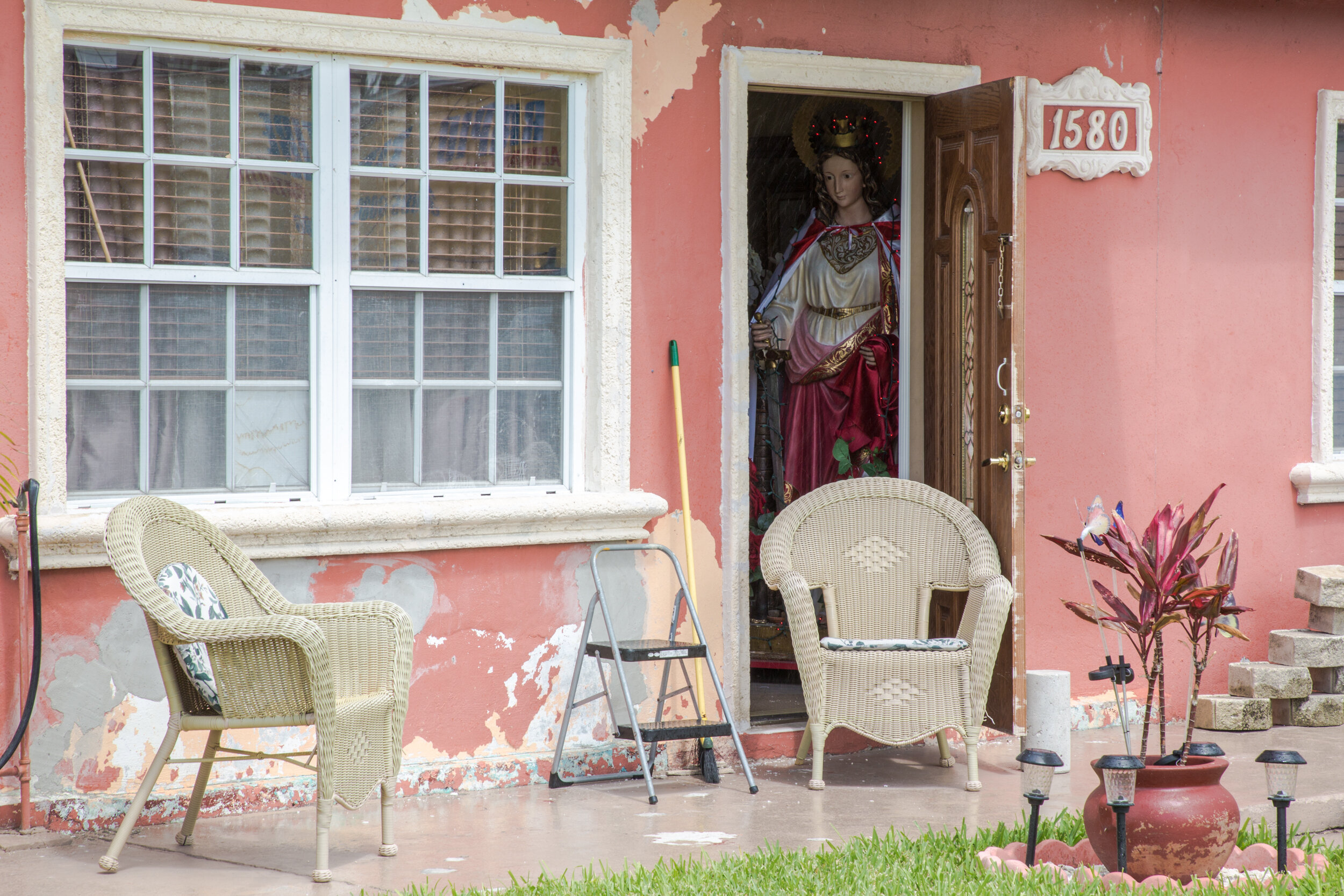
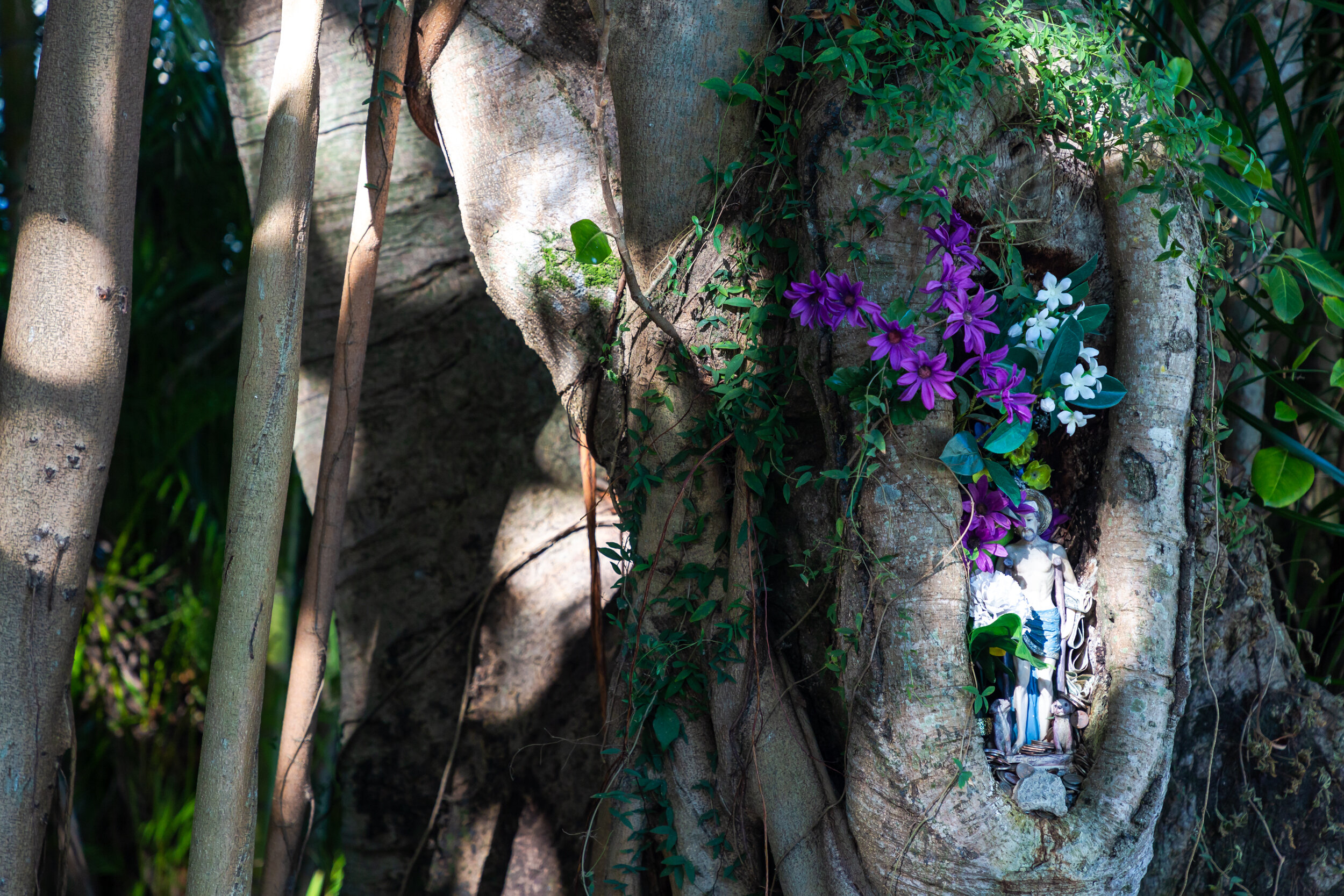
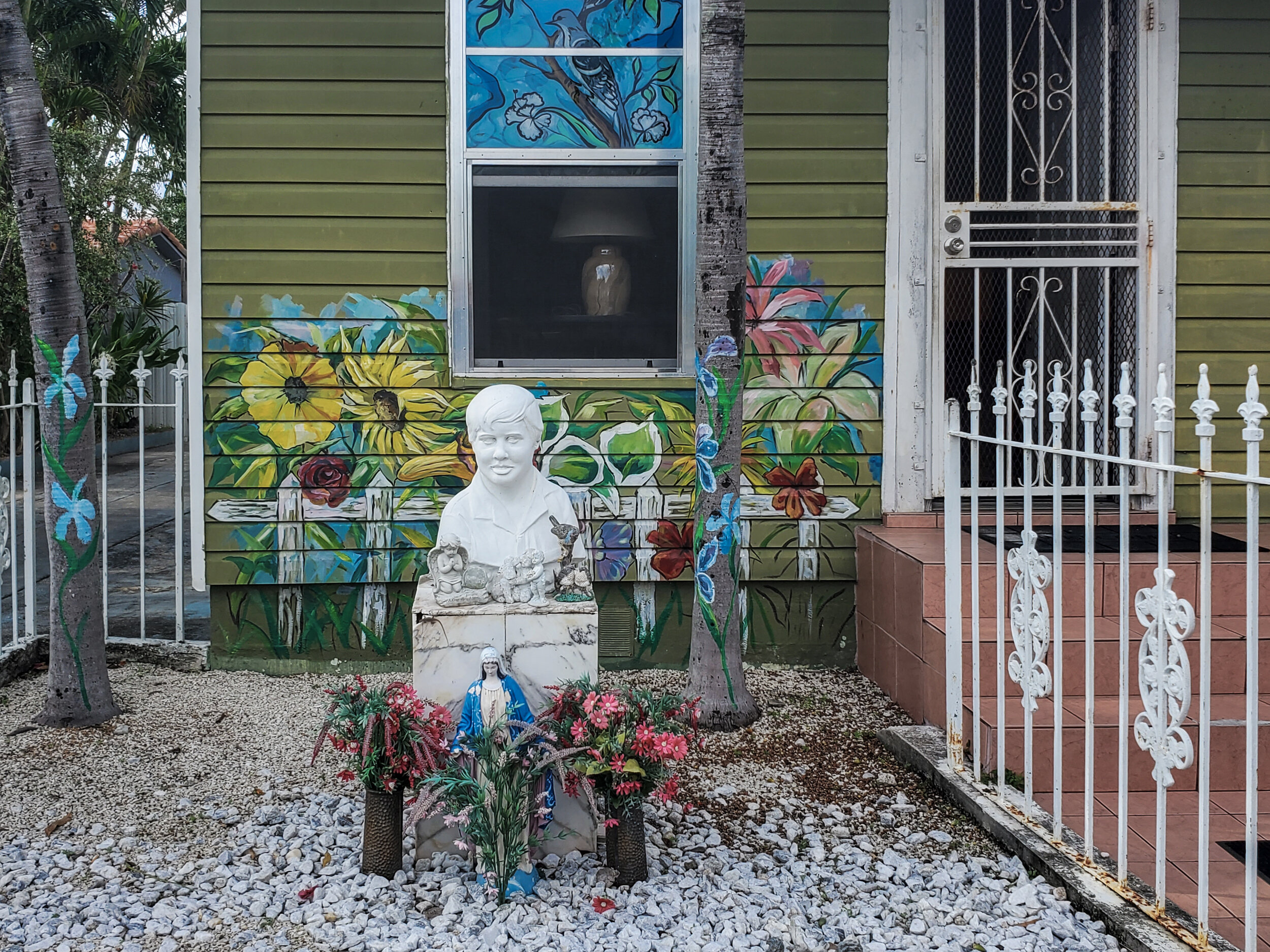
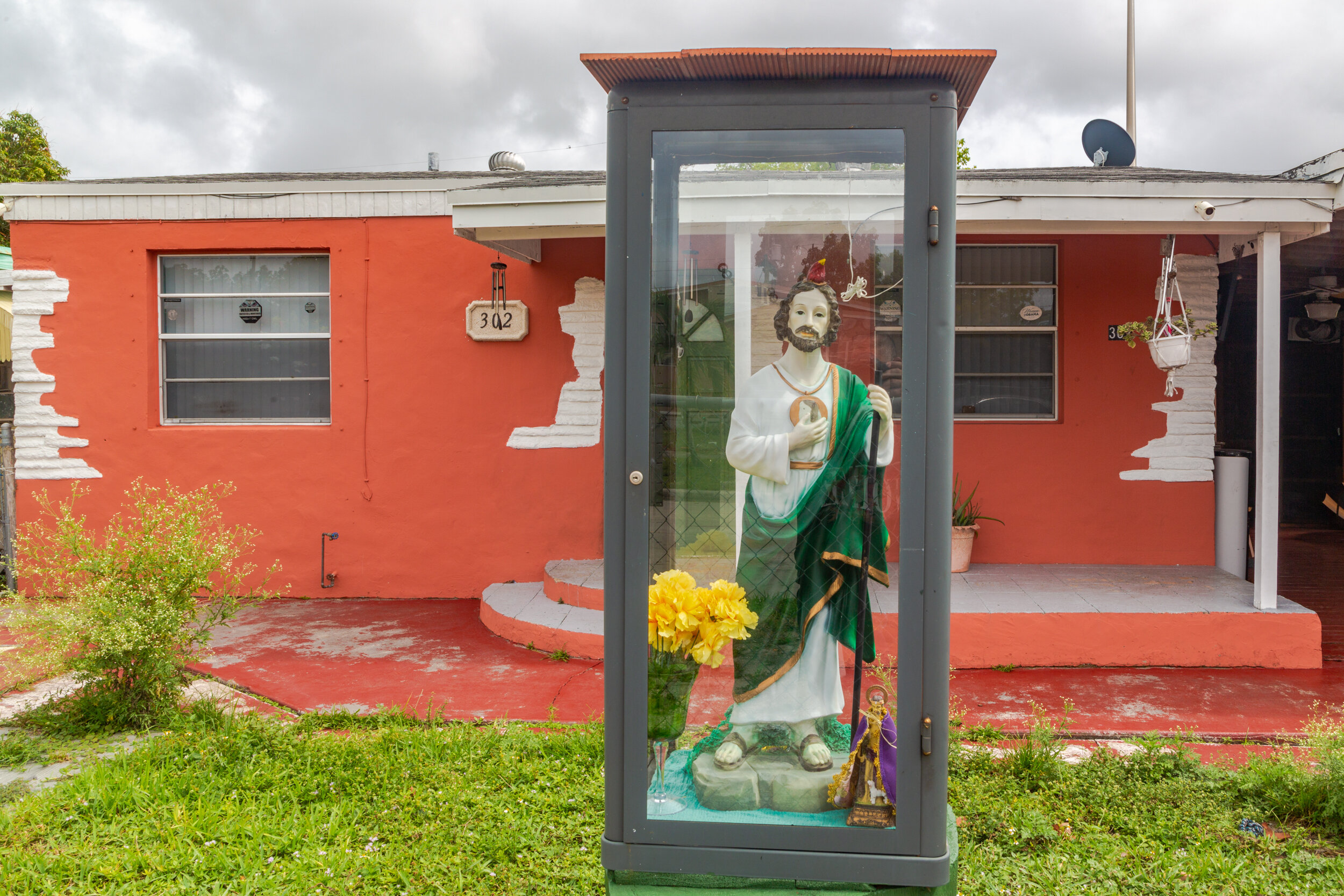
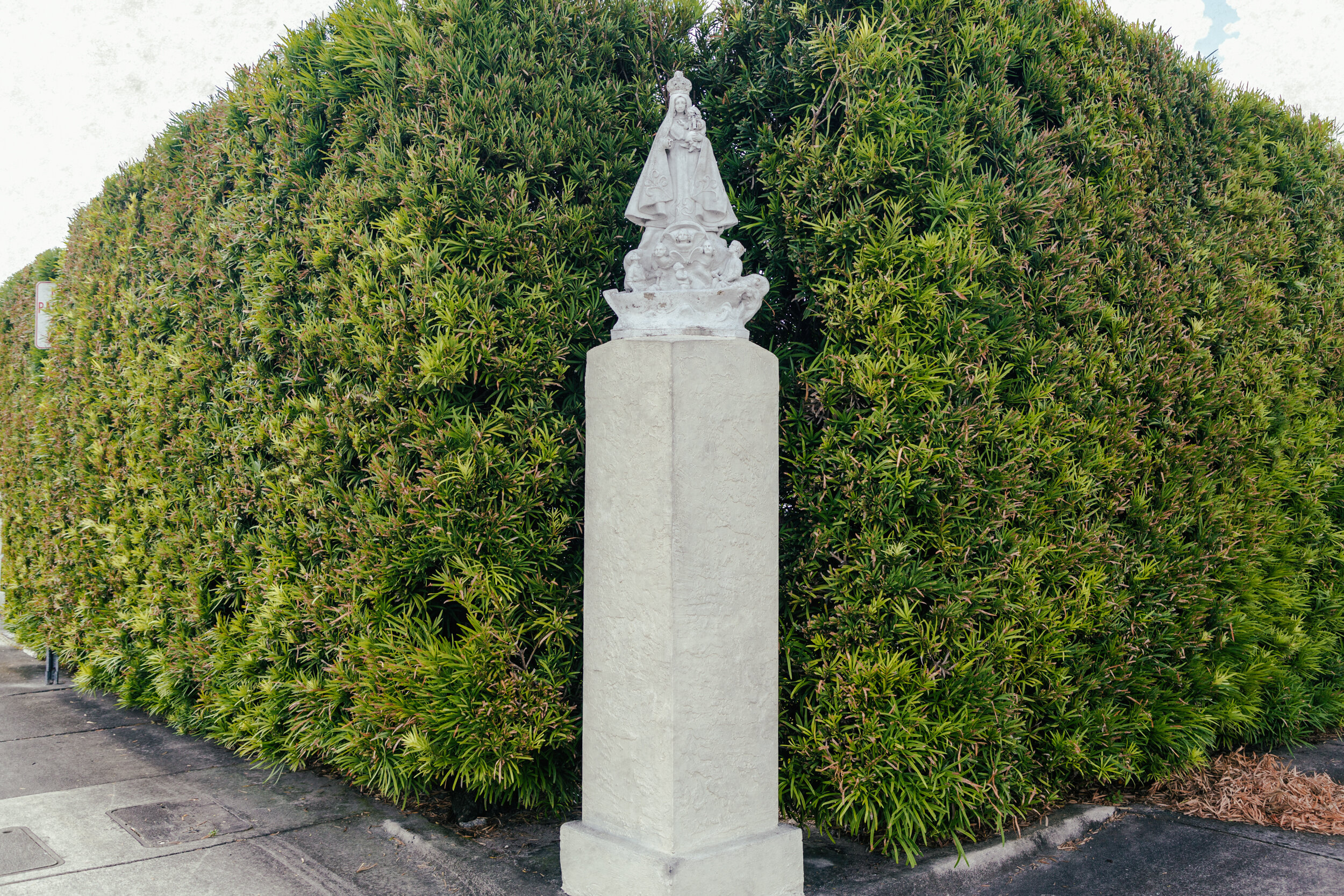
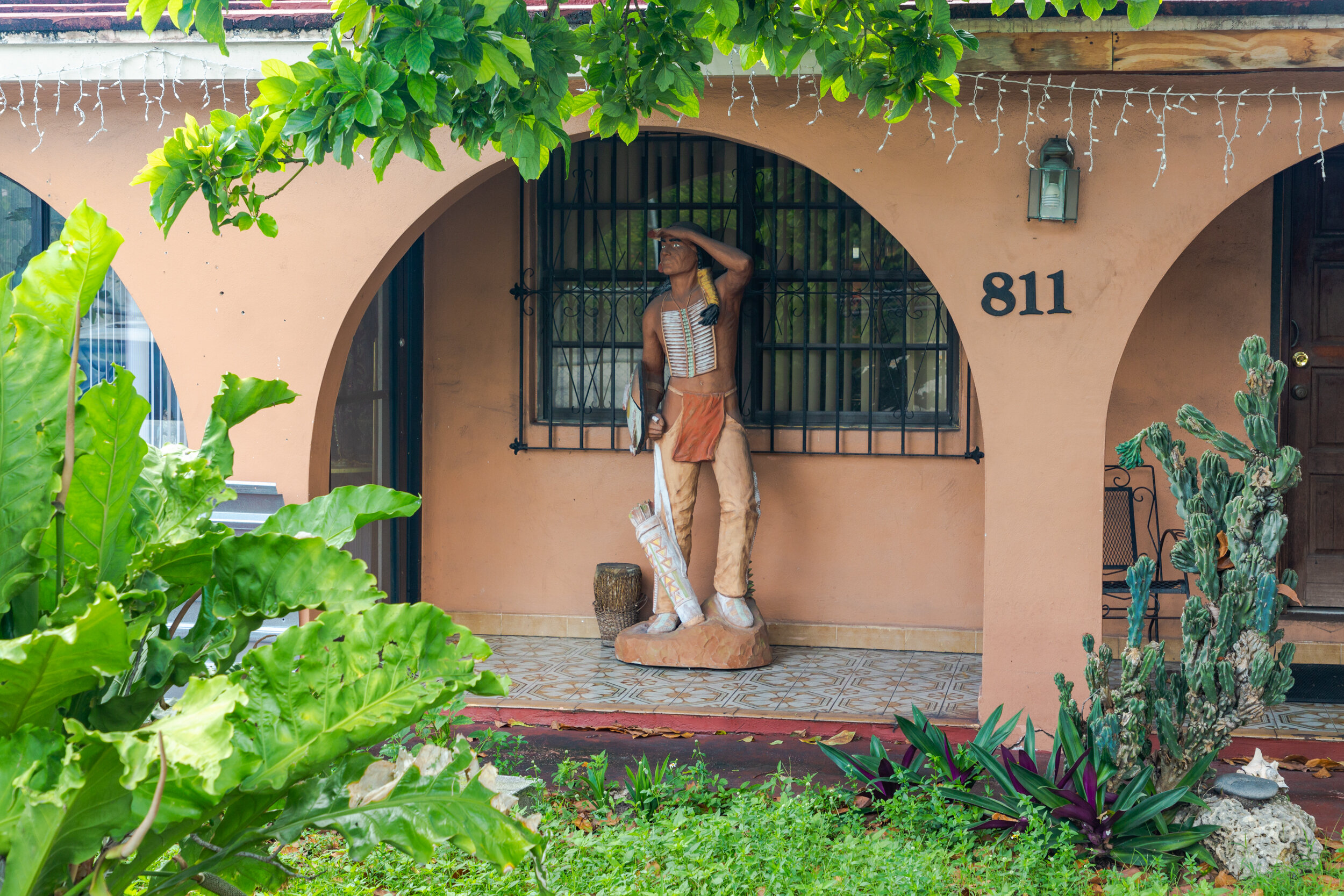
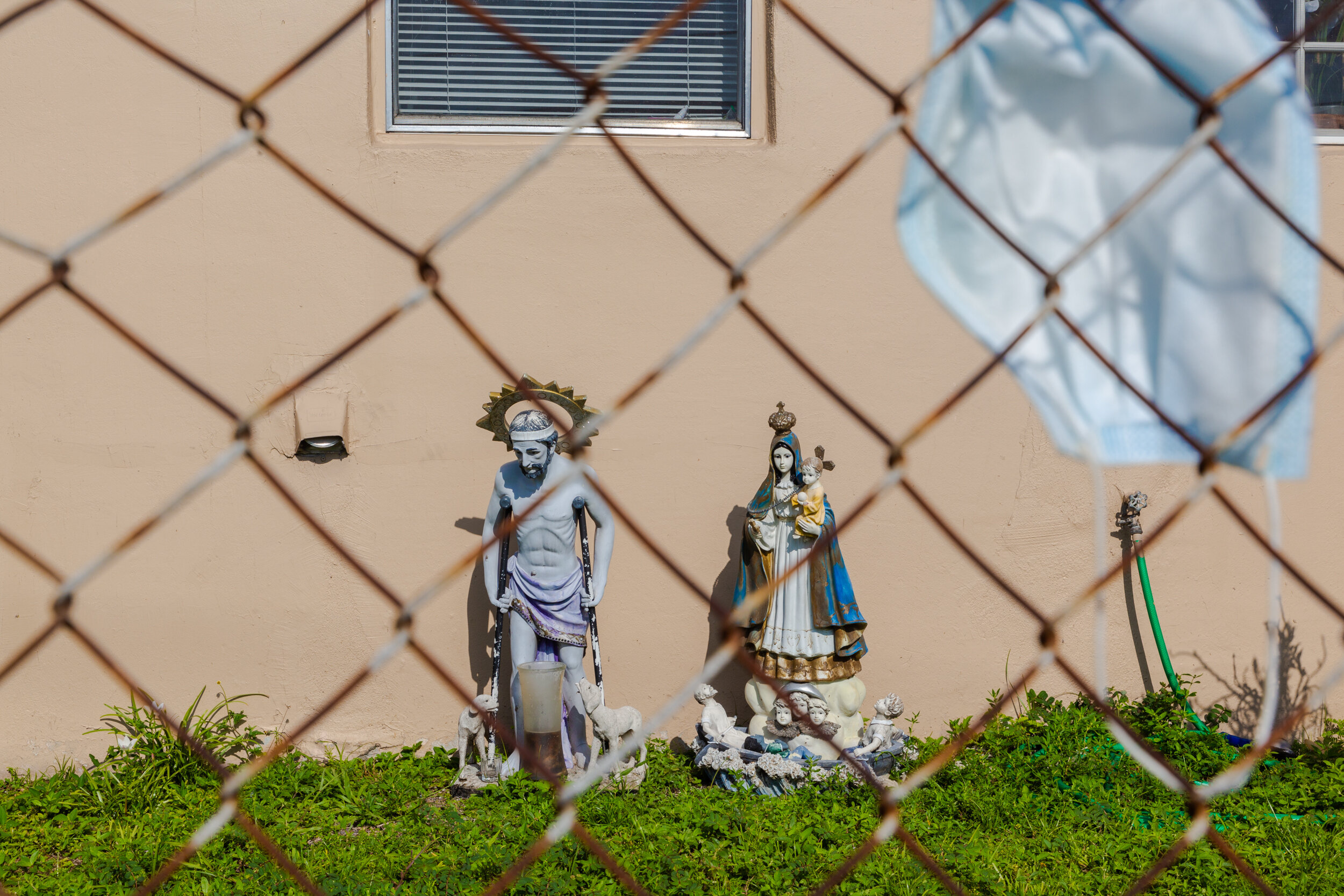
Urban Shrines photographs domestic altars and religious offerings — Santa Barbara paired with Changó, San Lázaro with Babalú-Ayé — as they inhabit sidewalks, porches, lawns, and property lines: threshold spaces where private devotion is compelled into public visibility. These are not ethnographic records. The camera keeps enough distance to leave the devotee's presence or absence an open question in each frame, refusing the ethnographic promise of access to belief or interiority. What the images track instead is architecture: how a shrine negotiates a setback line, a chain-link fence, a strip of grass zoned as buffer rather than as sacred ground.
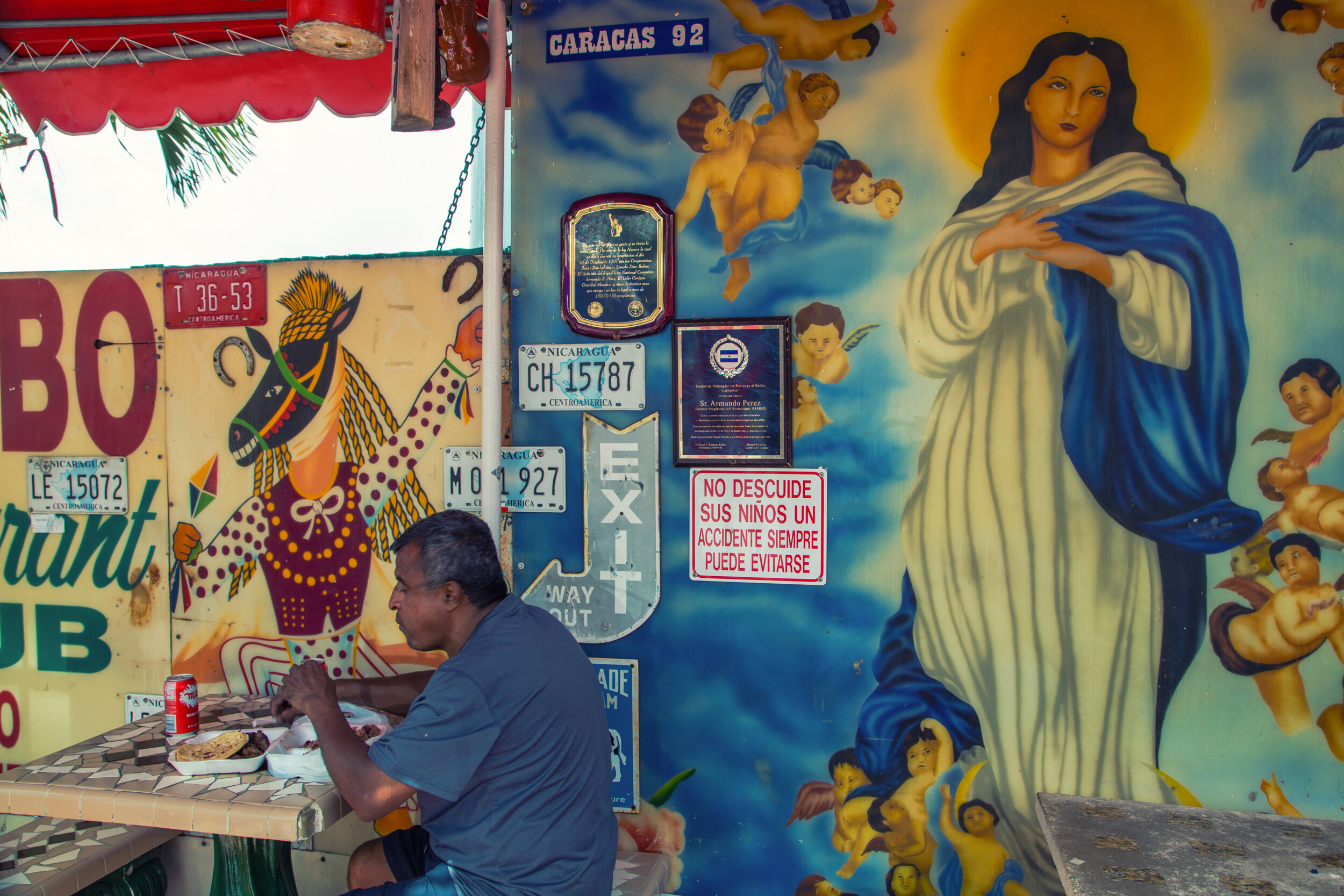
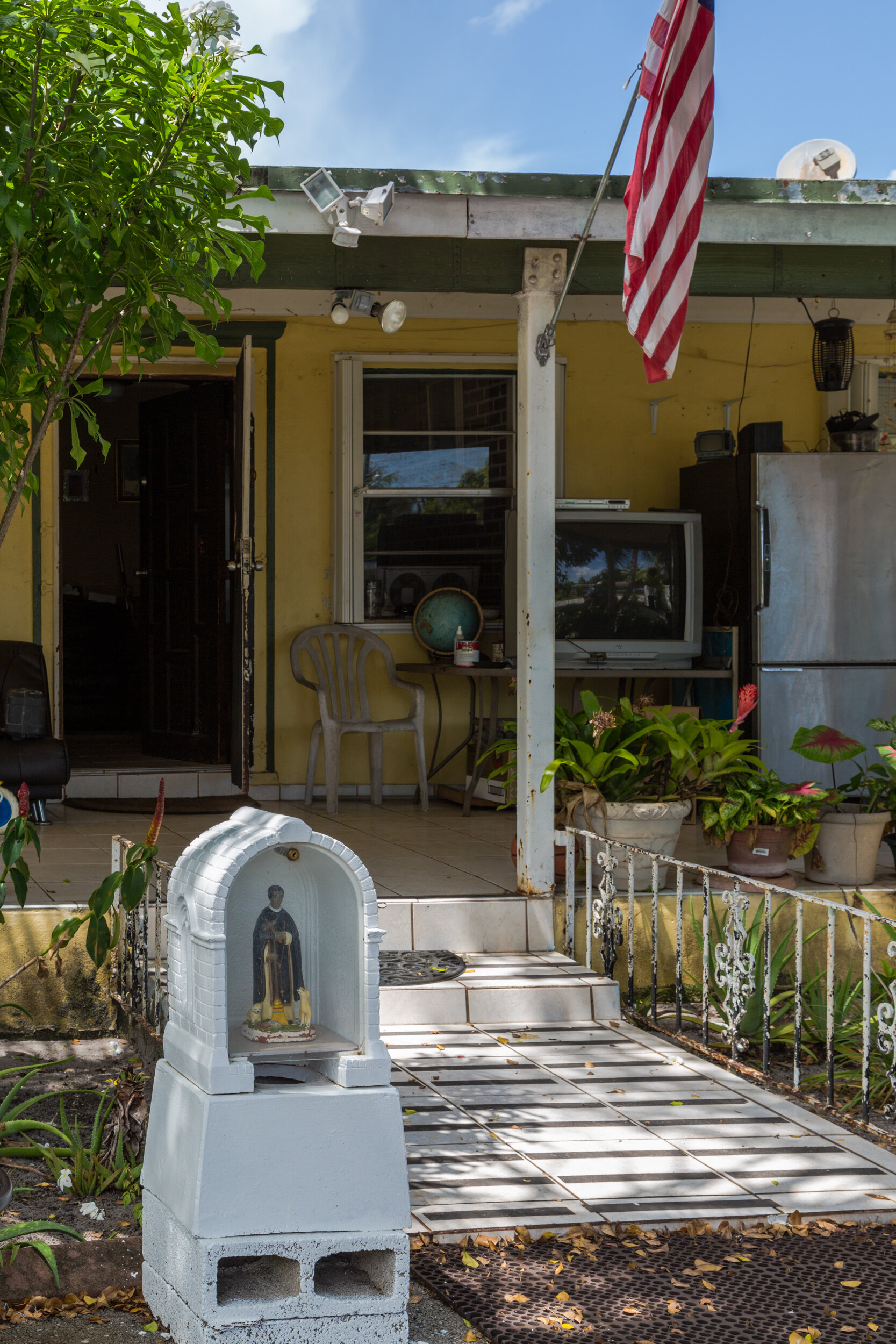
The series originates in Cuban exile practice, but the archive documents two distinct responses to that origin, not one. Some non-Cuban Latino households have adopted Lucumí devotional forms themselves, extending the Afro-Yoruba lineage of Changó and Babalú-Ayé beyond the community that first carried it into exile. Others hold their own national traditions intact instead: a Nicaraguan business keeps La Purísima, the nation's own patronal devotion to the Immaculate Conception, marked each December with home and street altars, a novena, and the call-and-response of La Gritería. A Peruvian household's threshold holds an image of San Martín de Porres, Lima-born, of mixed African and Spanish descent, canonized as a patron of the poor and of racial reconciliation — a devotion with no derivation from the Cuban tradition this series opens with, carrying its own history into the same visual field. Assimilation into an adopted practice, and preservation of an inherited one: both are migration's ordinary outcomes, and both are visible here, sometimes on the same block. What the series tracks is not which response prevails but that both, indifferently, submit to the same threshold — the same porches, lawns, and property lines that a 1978 complaint once treated as neutral ground.
Read together, the images ask a narrower question than "what does this mean": what does it cost, and to whom, for a belief system — adopted or inherited — to become visible on property that is also collateral, also assessed, also subject to a neighbor's complaint. The 1978 shrine was treated as a liability. This series treats that liability as a condition claimed, by whichever route, by every household that has since made Miami's threshold spaces its own.